Sheet 1
8 questions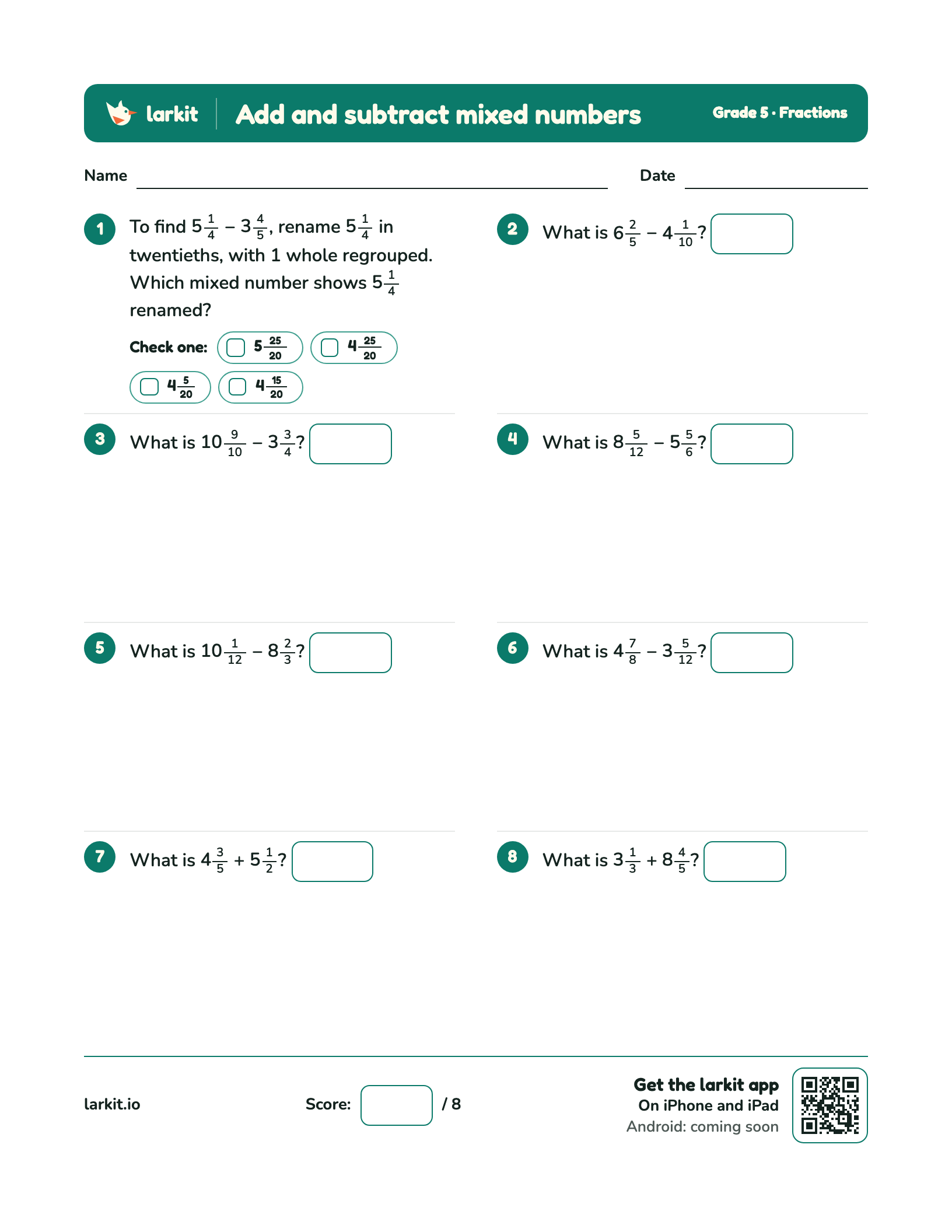
Free 5th grade worksheets
2 printable PDFs, each with its answer key. Mixed numbers with unlike denominators to add and subtract, including renaming a whole.
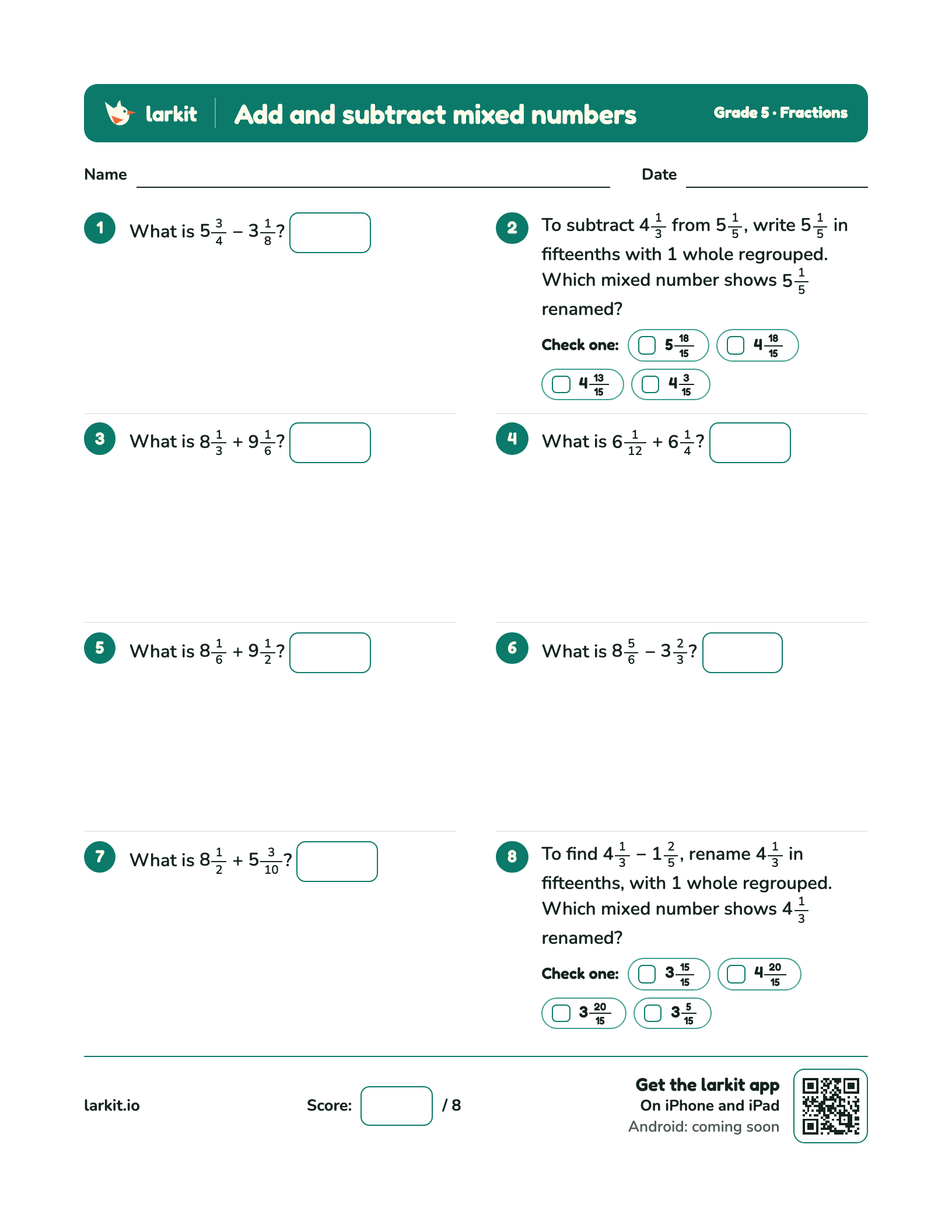
Worksheet maker
With larkit Premium you make new sheets for any skill, as many as you like, each with its answer key.
8 questions on US Letter paper, with a box for the score. Some from sheet 1:
4 3/5 + 5 1/2 and 8 5/12 − 5 5/6 are the kind of problems on these sheets: mixed numbers whose fractions have different denominators. Fifth graders also show how to rename a mixed number with 1 whole regrouped before subtracting.
Two things trip children up: finding a common denominator, and regrouping when the fraction being subtracted is bigger. In 8 5/12 − 5 5/6, 5/6 is 10/12, which is more than 5/12, so a whole is renamed and 8 5/12 becomes 7 17/12.
Before working it out, ask your child to estimate: 8 and a bit minus 5 and most of one is between 2 and 3. Then work through each step out loud. Rename the fractions, check whether regrouping is needed, then subtract the wholes and the fractions.