Sheet 1
6 questions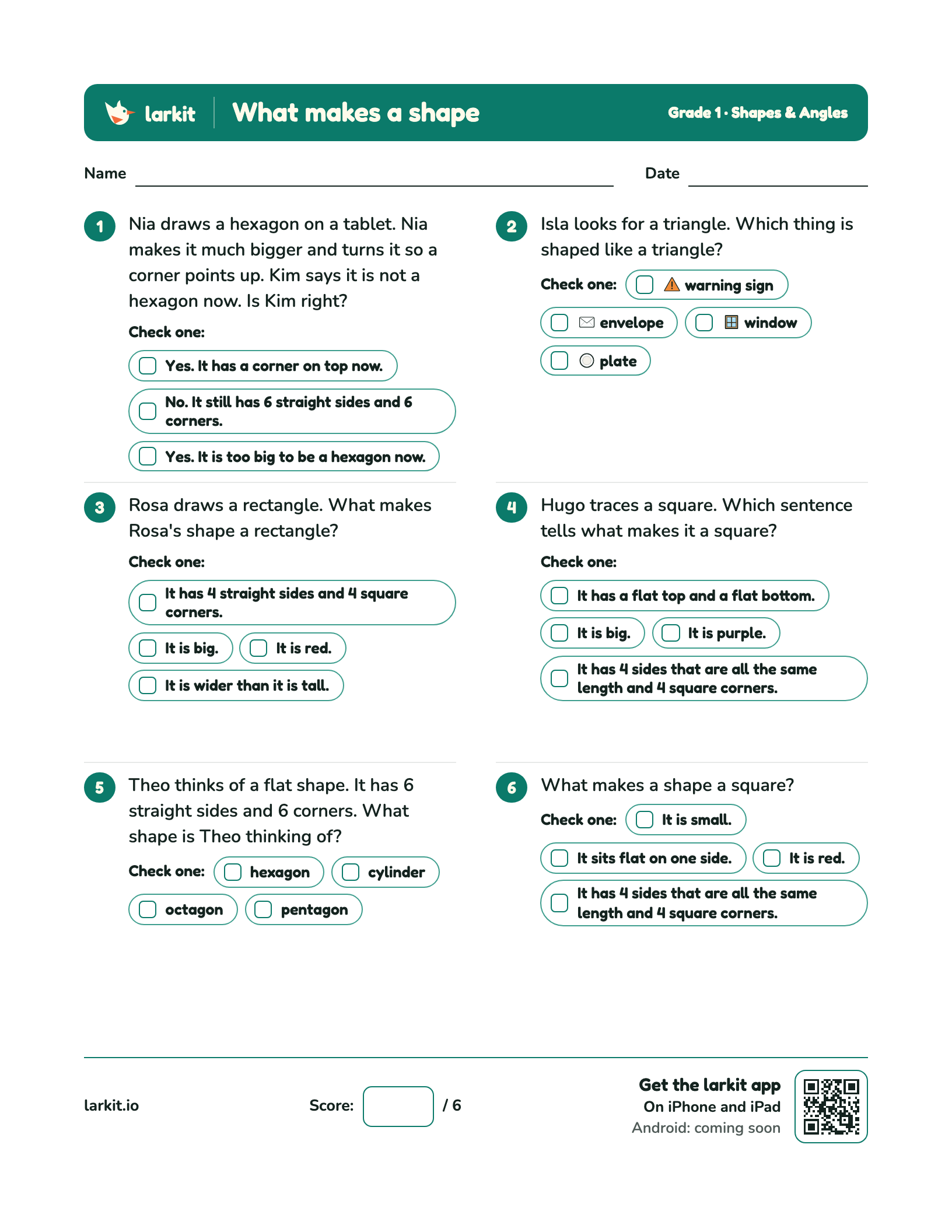
Free 1st grade worksheets
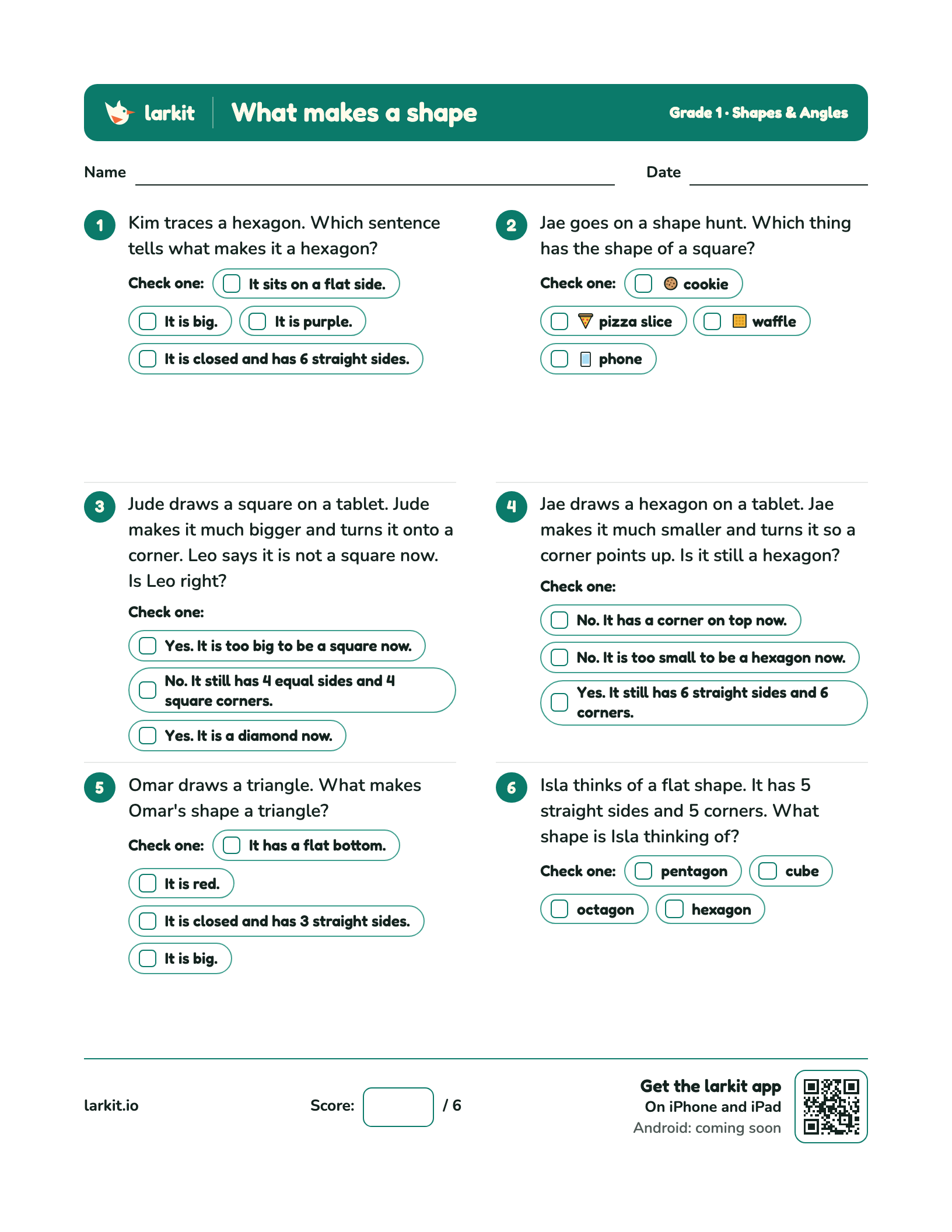
2 printable PDFs, each with its answer key. What makes a triangle a triangle: sides, corners and closed shapes, plus guess-my-shape riddles and shape hunts.
Worksheet maker
With larkit Premium you make new sheets for any skill, as many as you like, each with its answer key.
6 questions on US Letter paper, with a box for the score. Some from sheet 1:
A triangle is a triangle because it has 3 straight sides and 3 corners, not because it is red, big or pointing up. Sorting out what matters about a shape and what doesn't is most of first grade geometry. The sheets ask kids to name a shape from clues, say what makes a rectangle a rectangle, and find real things shaped like a square or triangle.
Many children think a triangle turned upside down, or a long thin one, is no longer a triangle. Others call a square a rectangle's opposite, when a square is a kind of rectangle.
Go on a shape hunt around the house: a window, a slice of toast, a yield sign on a walk. For each one, ask "How do you know?" and wait for an answer about sides and corners. Drawing a strange-looking triangle and asking whether it still counts is a good way to start a conversation.