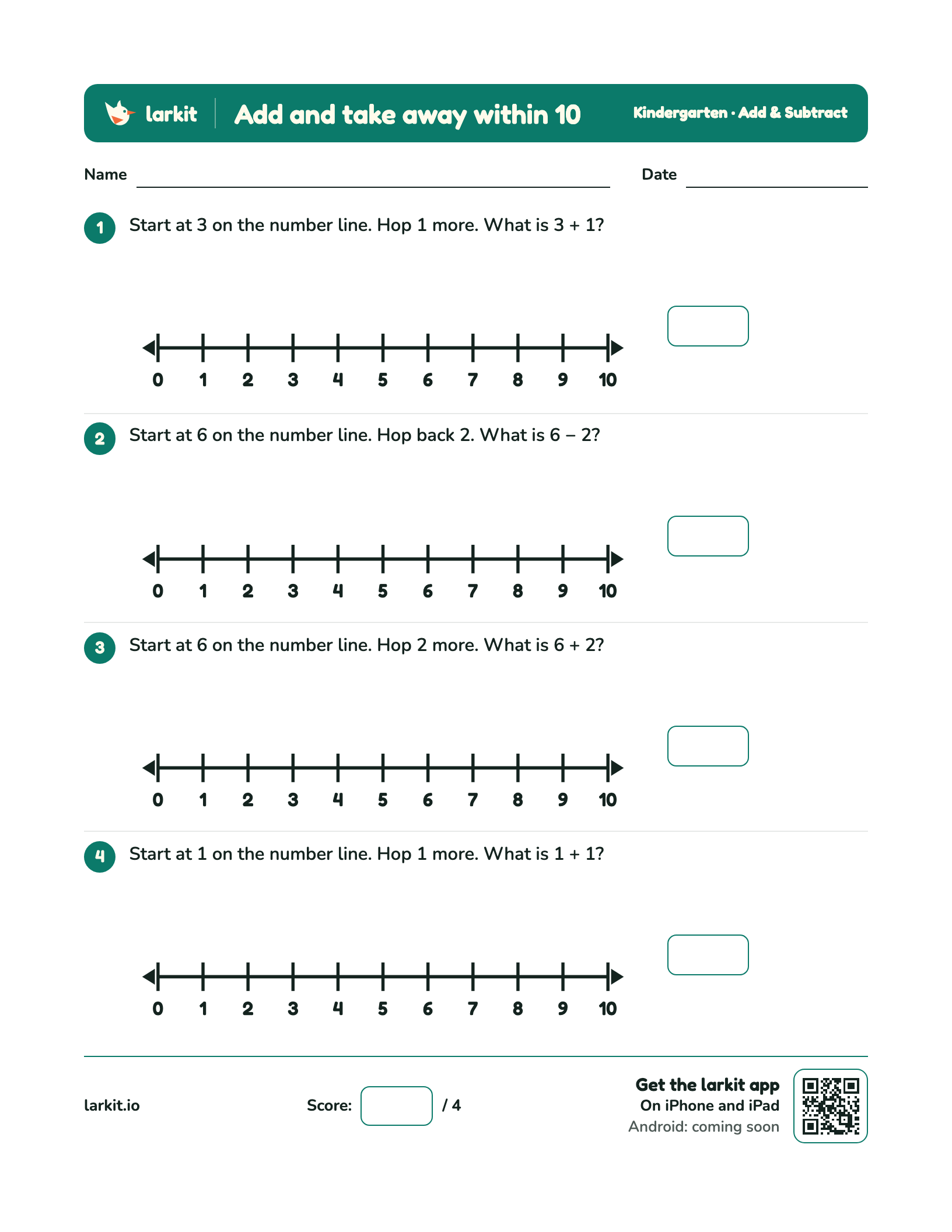
Add and take away within 10
Hop forward to add and hop back to take away, then write the answer.
Free printable
A number line turns a sum, a fraction or a rounding question into something a child can point at. Every question on these sheets comes with its own number line, and every sheet has an answer key.
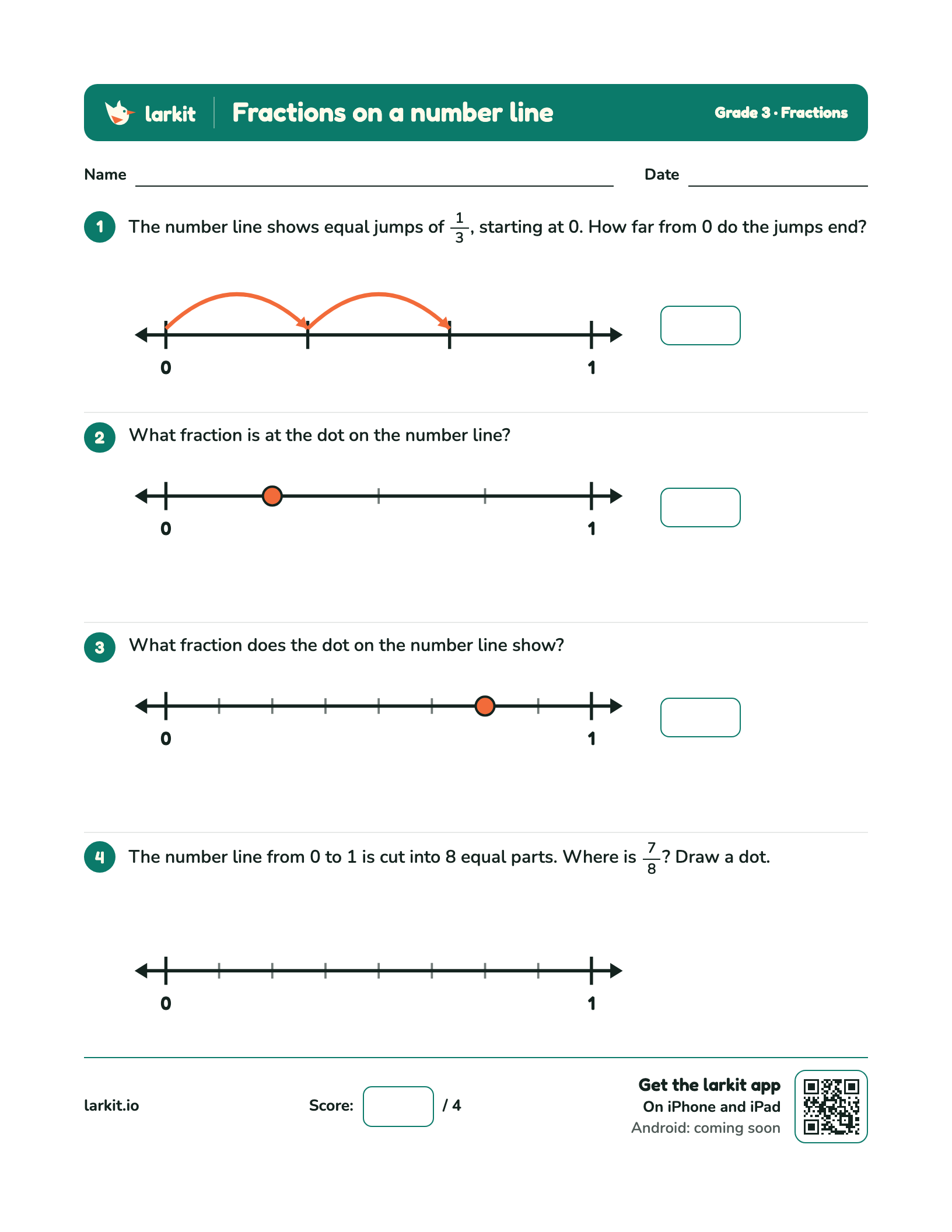
Hop forward to add and hop back to take away, then write the answer.
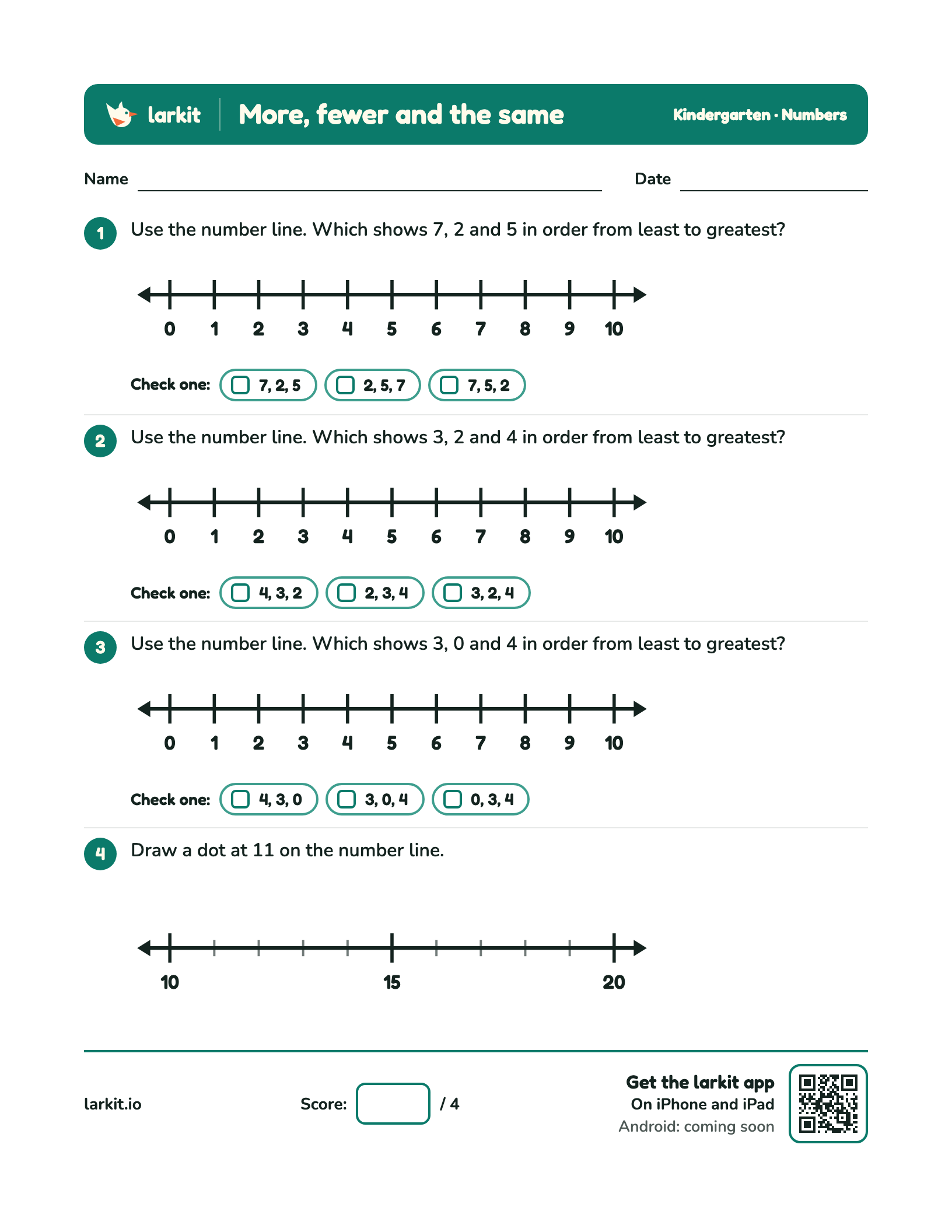
Use the line to put three numbers in order, and draw a dot at a number.
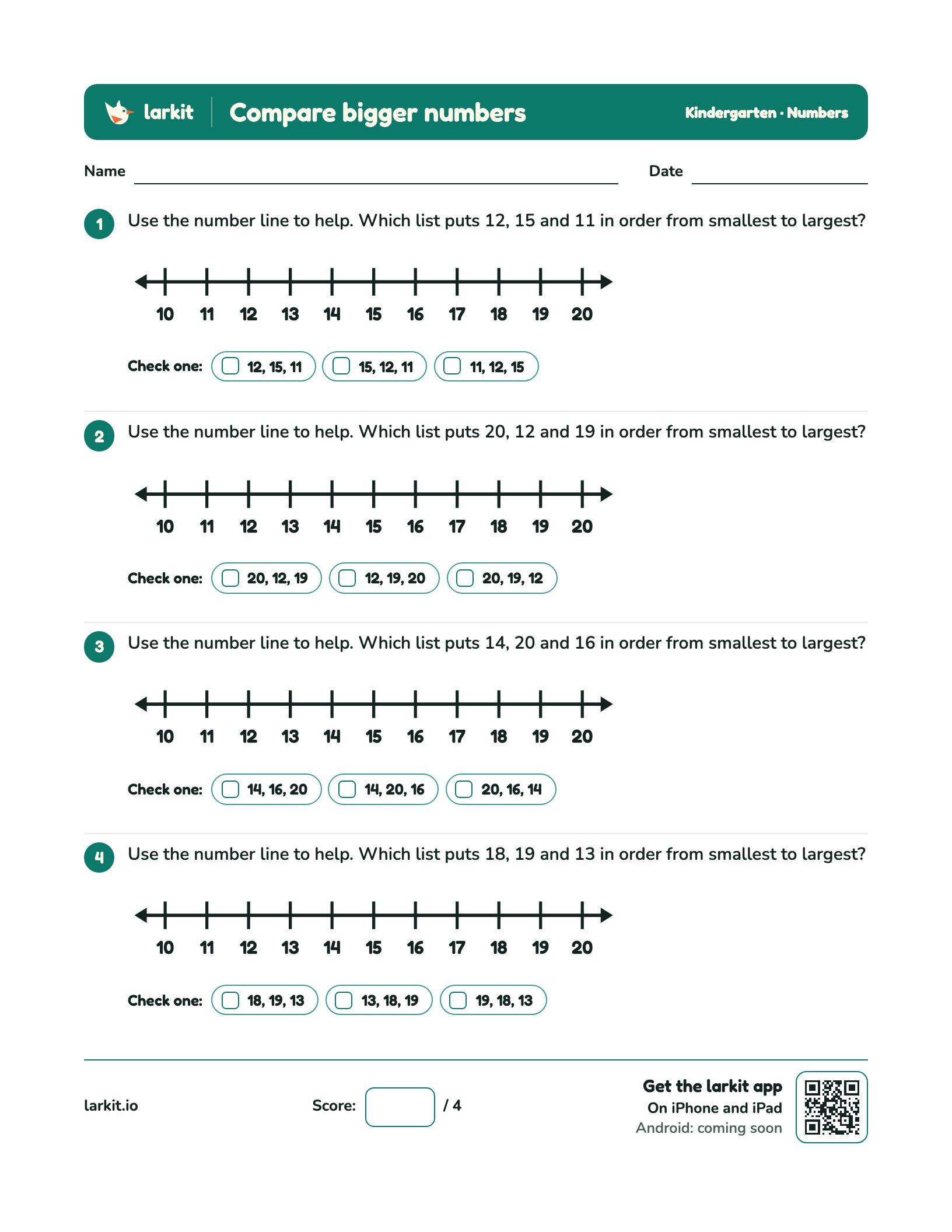
Use a line from 10 to 20 to find the list that puts three numbers in order.
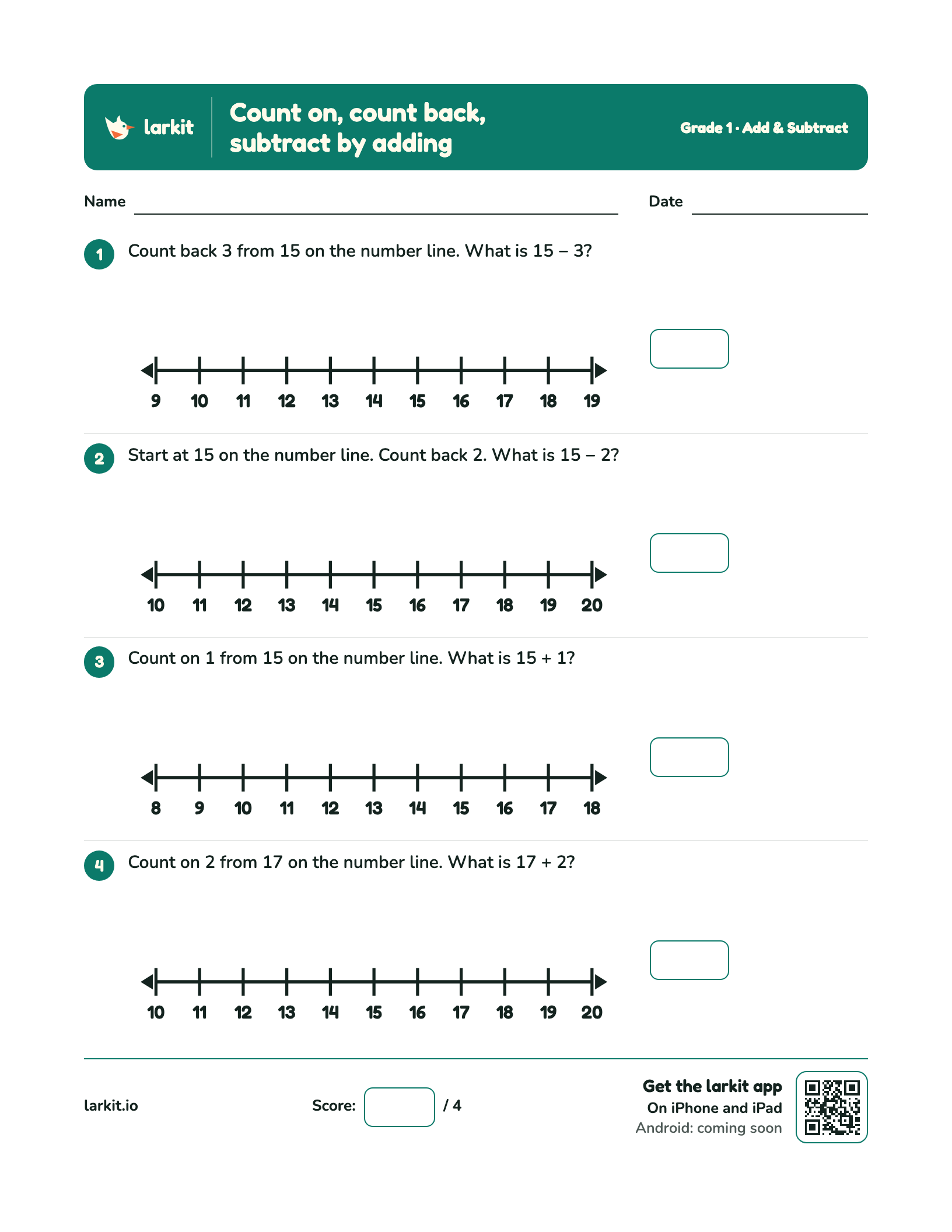
Start at a number, count on or back, and write the sum or difference.
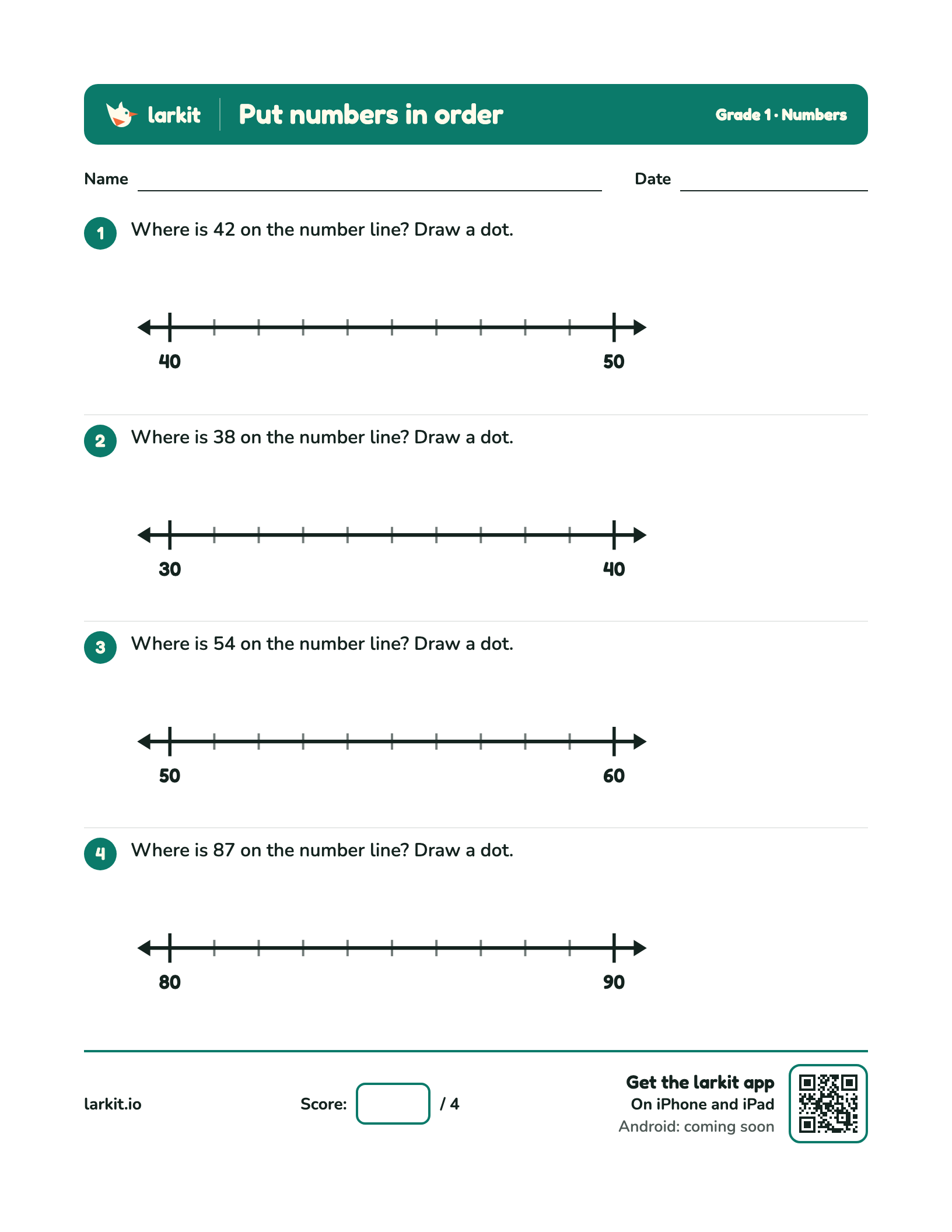
Draw a dot where a 2-digit number goes on the line.
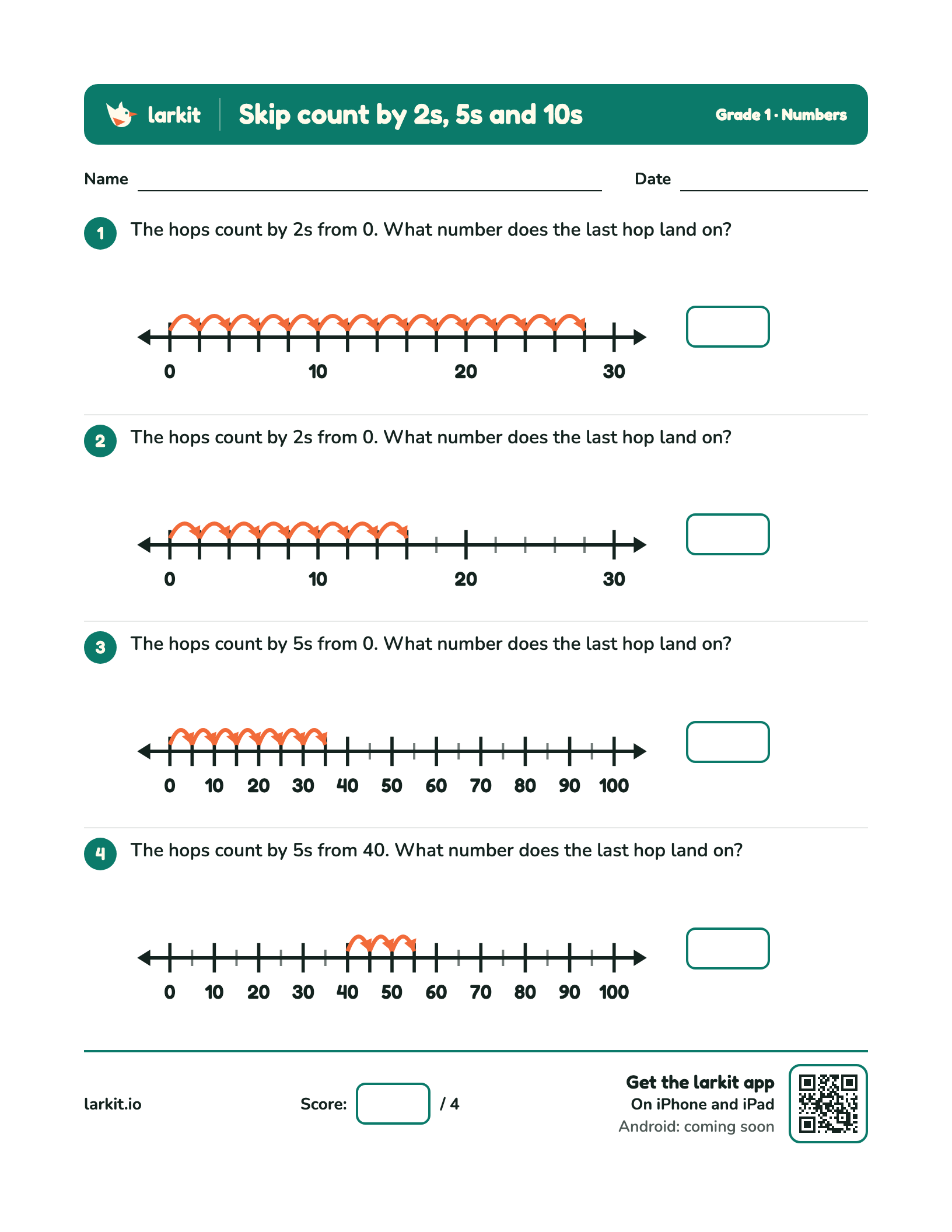
Follow hops that count by the same number to where the last hop lands.
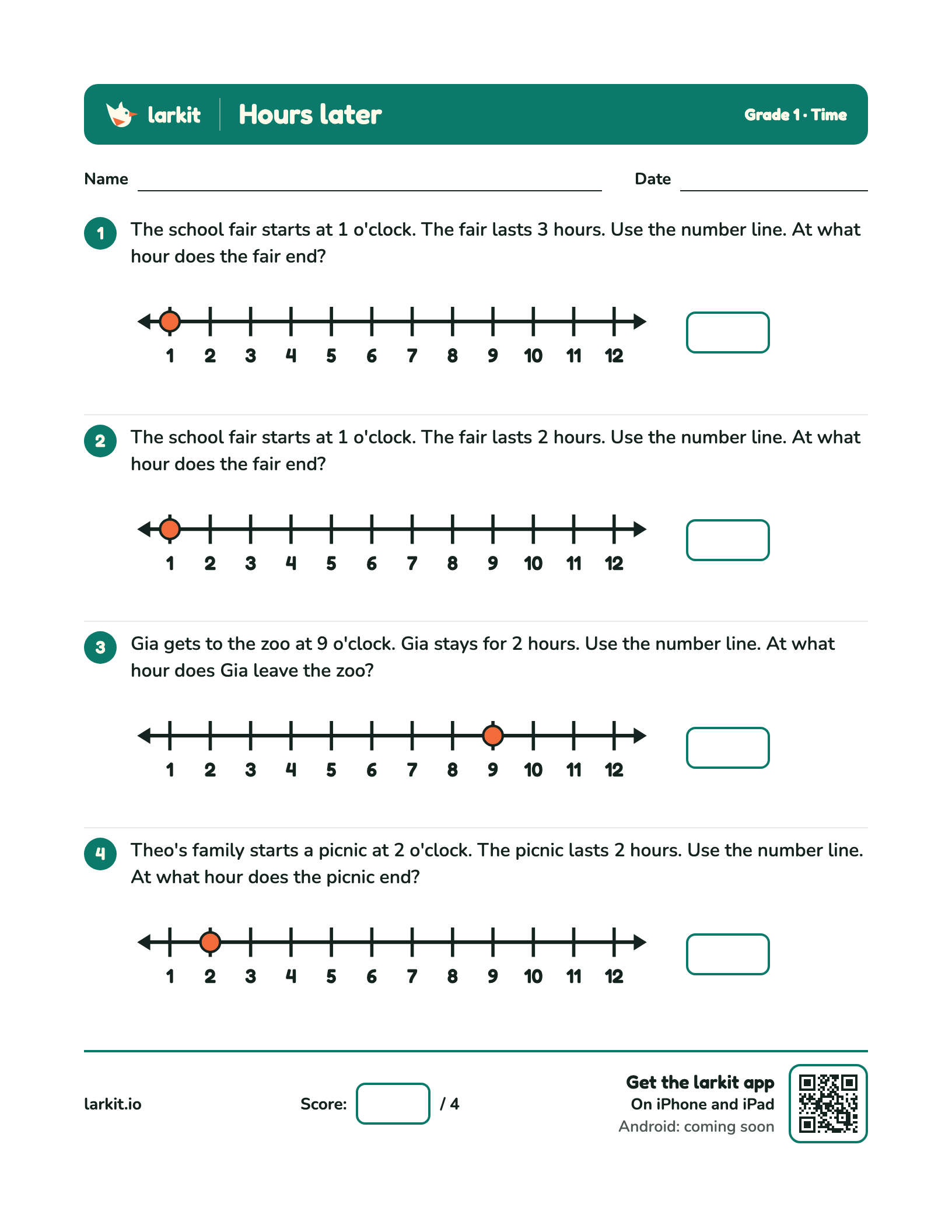
Count hours on the line to find the hour something ends.
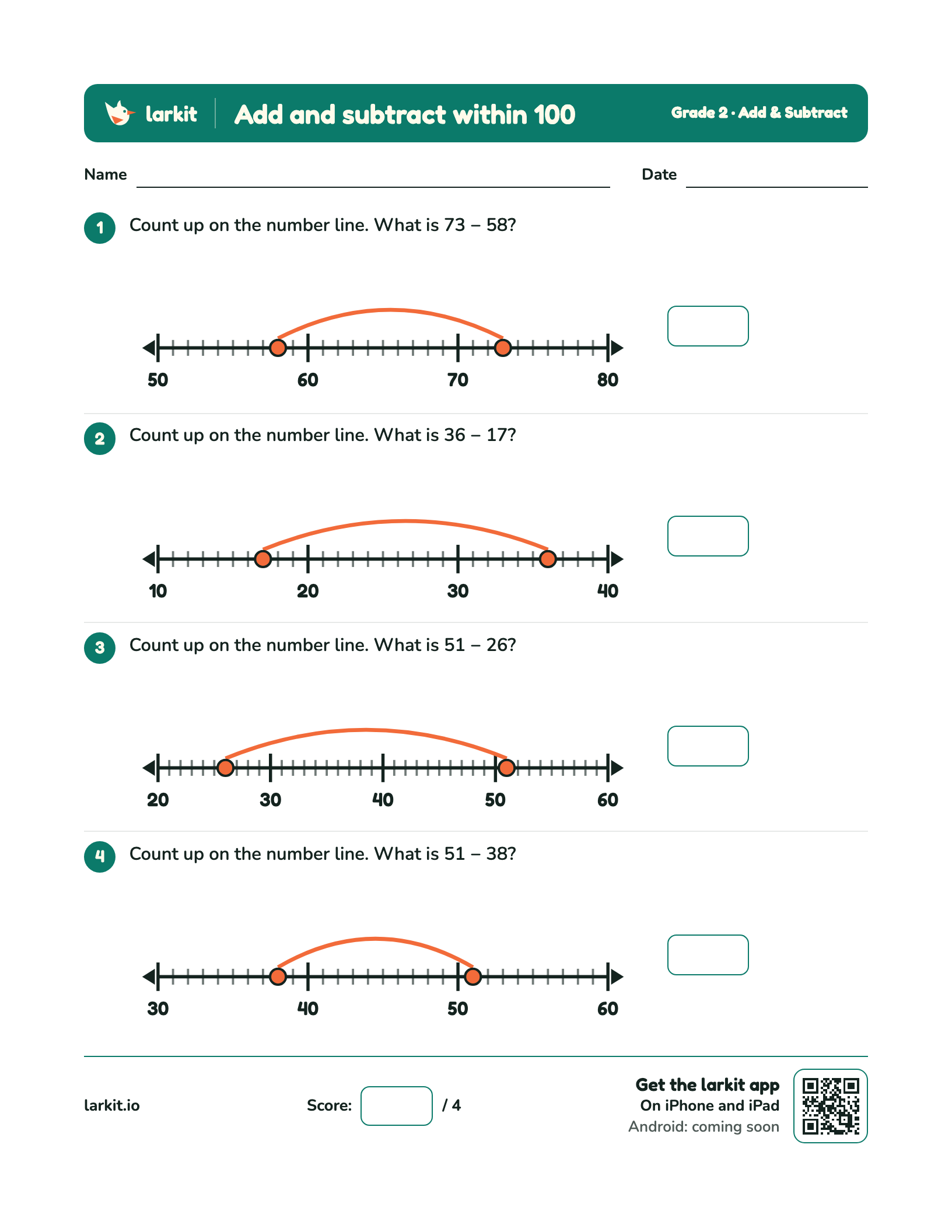
Count up on the line to subtract 2-digit numbers.
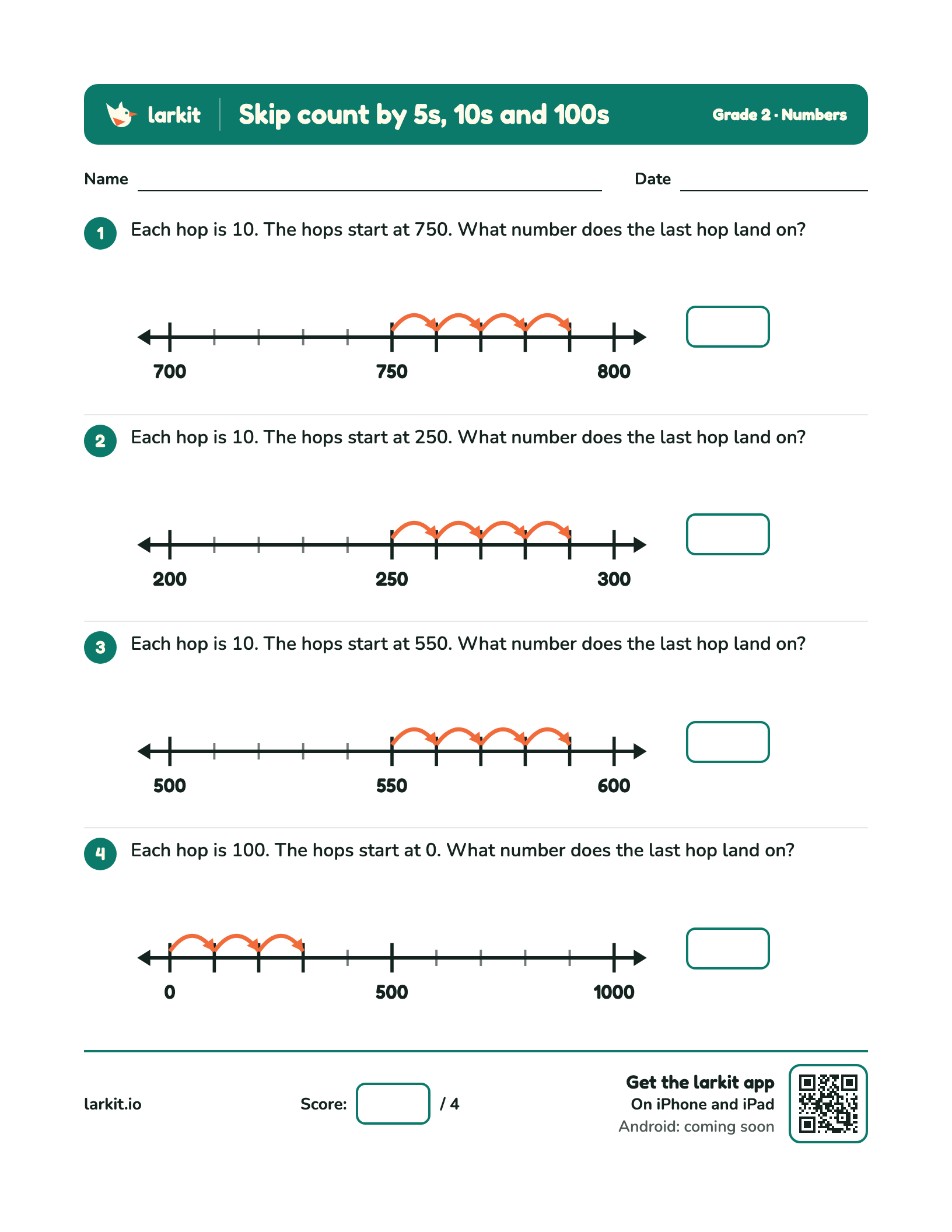
Follow equal hops from a start to where the last hop lands.
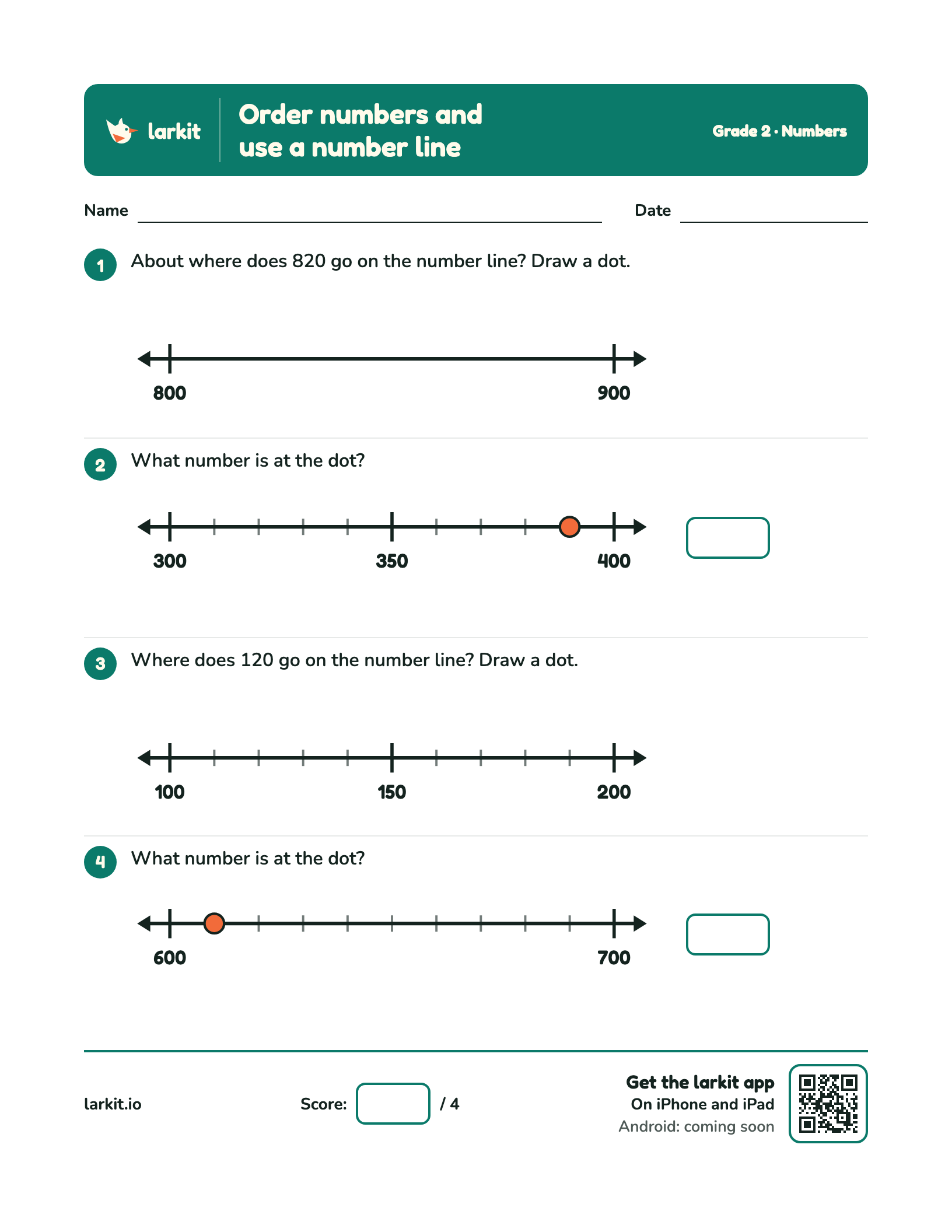
Draw a dot at a number up to 1,000, and read the number at a dot.
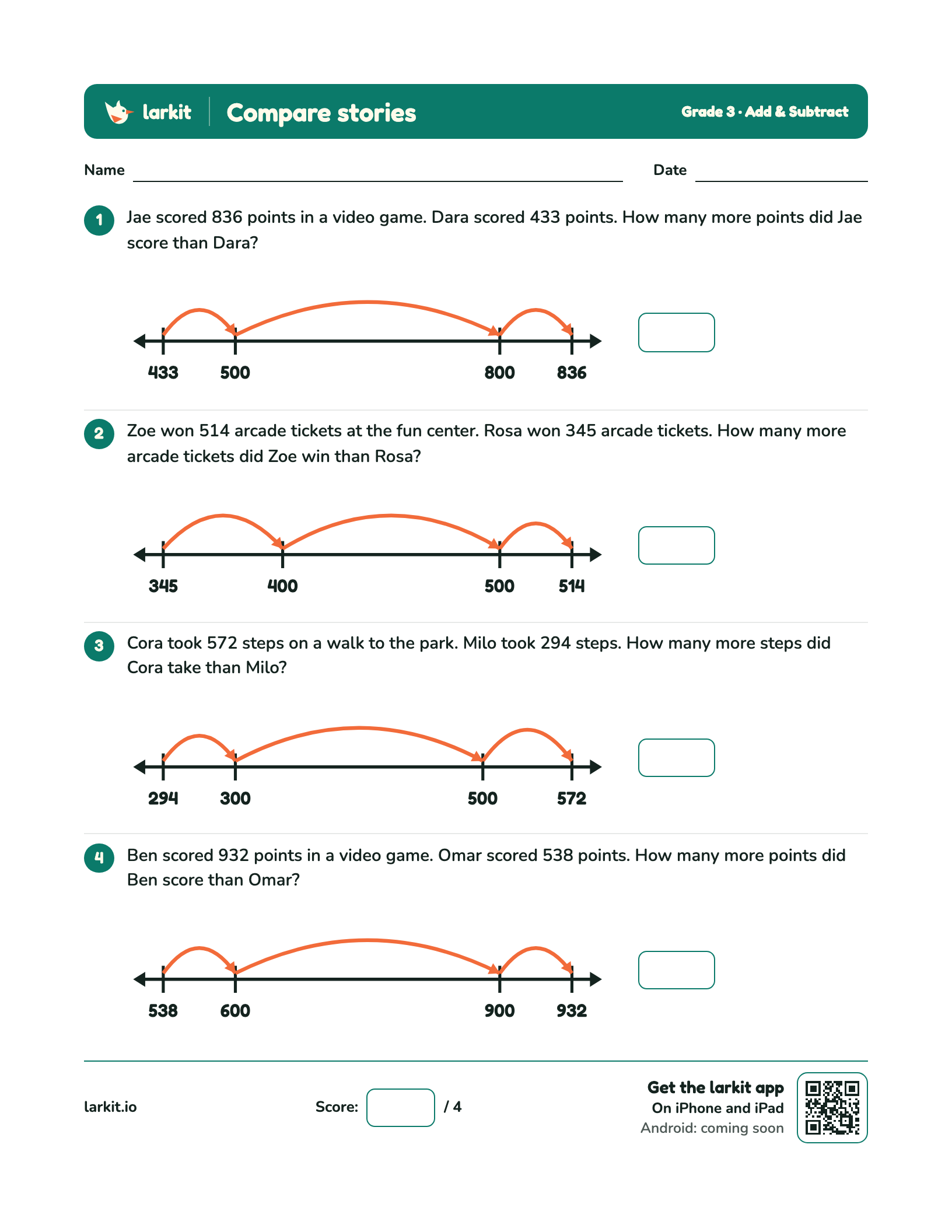
Solve how-many-more stories within 1,000 with a number line.
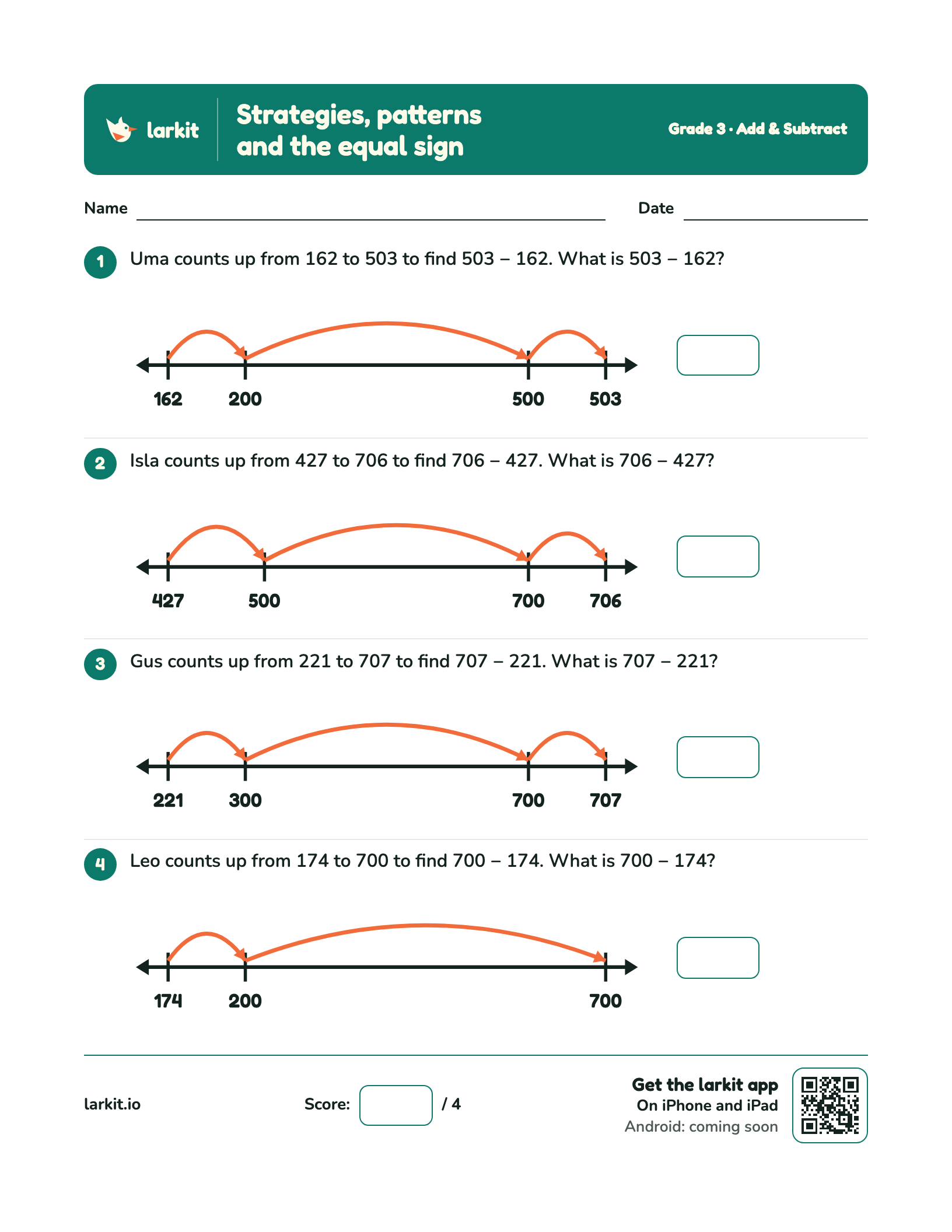
Count up from the smaller number on the line to subtract 3-digit numbers.
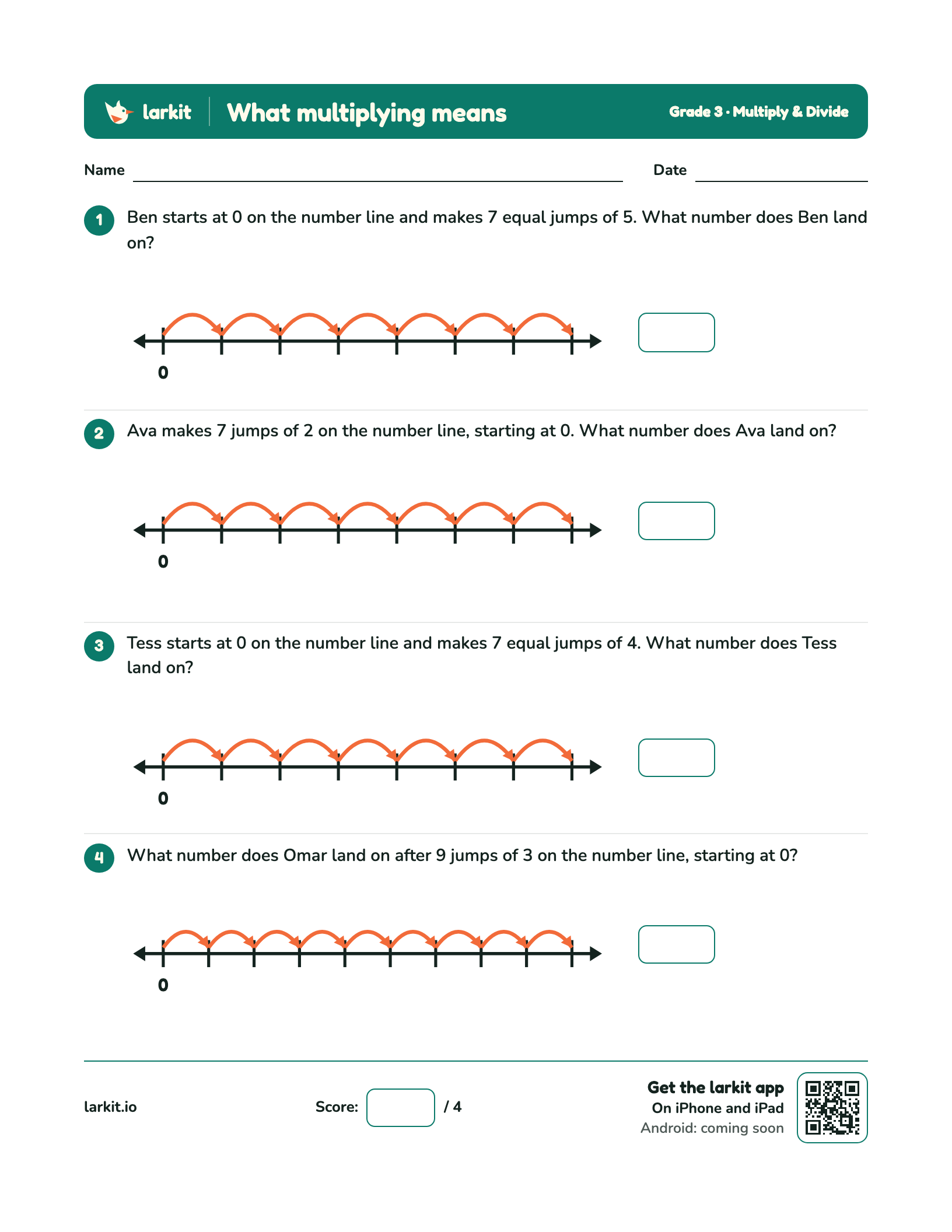
Follow equal jumps from 0 to the number where the last jump lands.
Name the fraction at a dot, draw a dot at a fraction, and find the mistake in a reading.
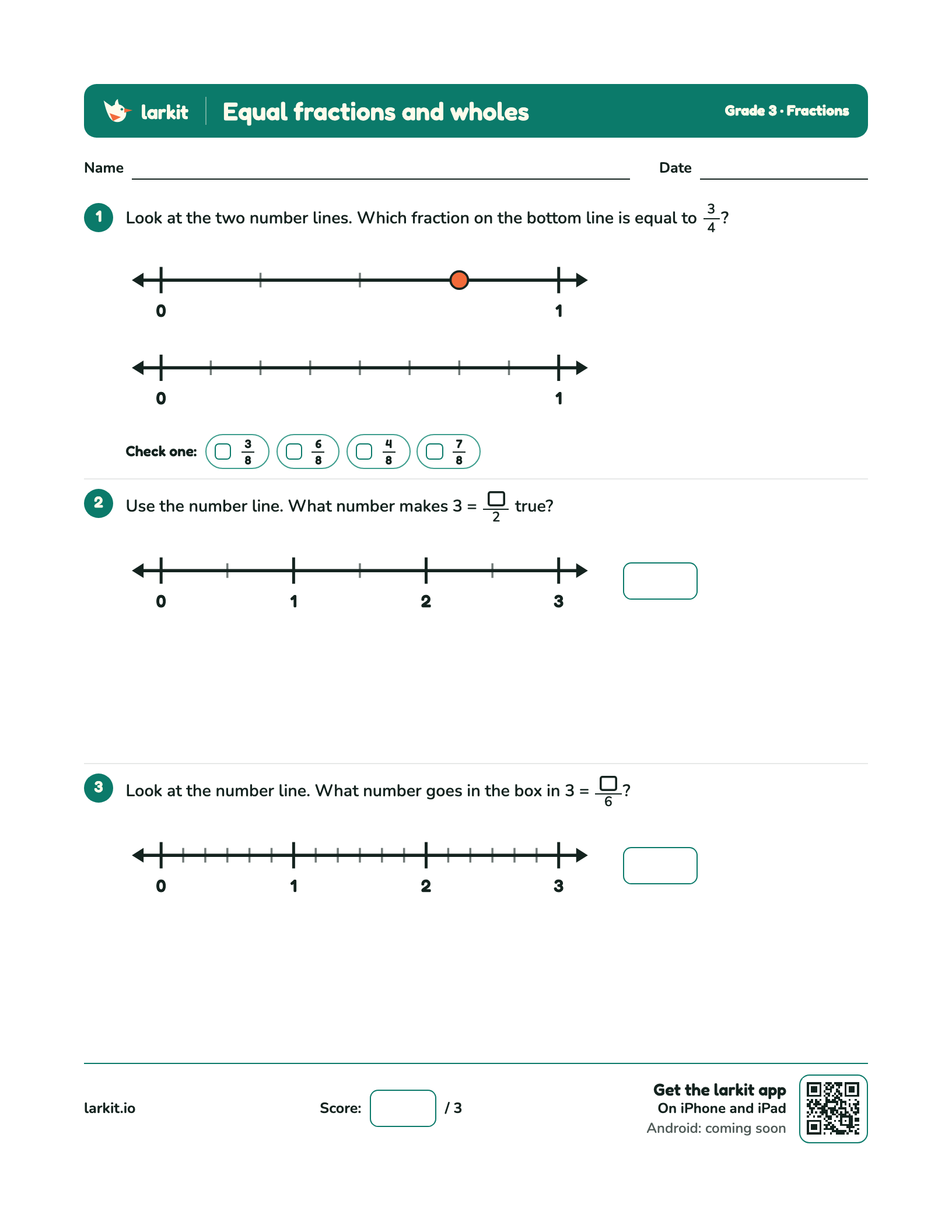
Write a whole number as a fraction on the line, and find an equal fraction on two lines.
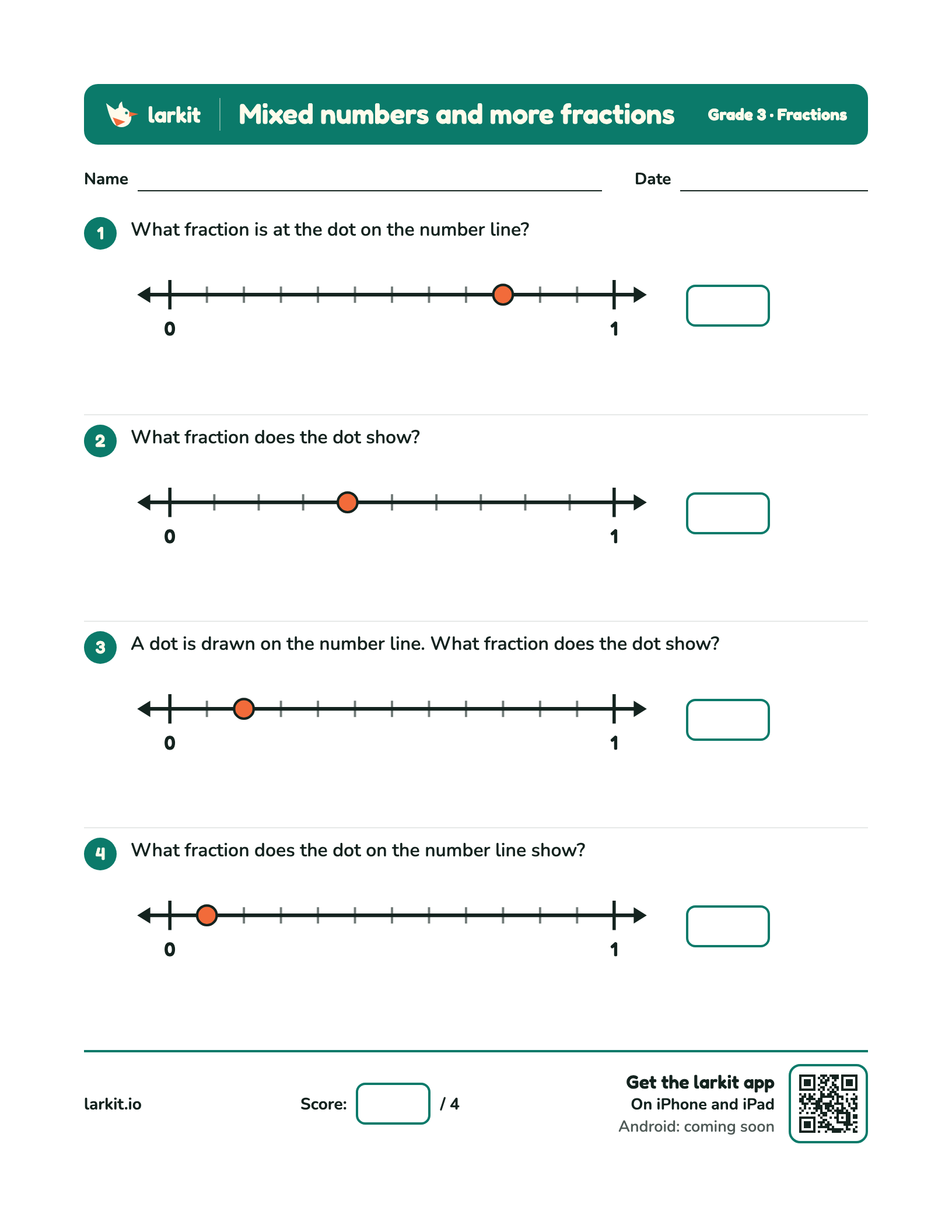
Read fractions in tenths and twelfths from a dot on the line.
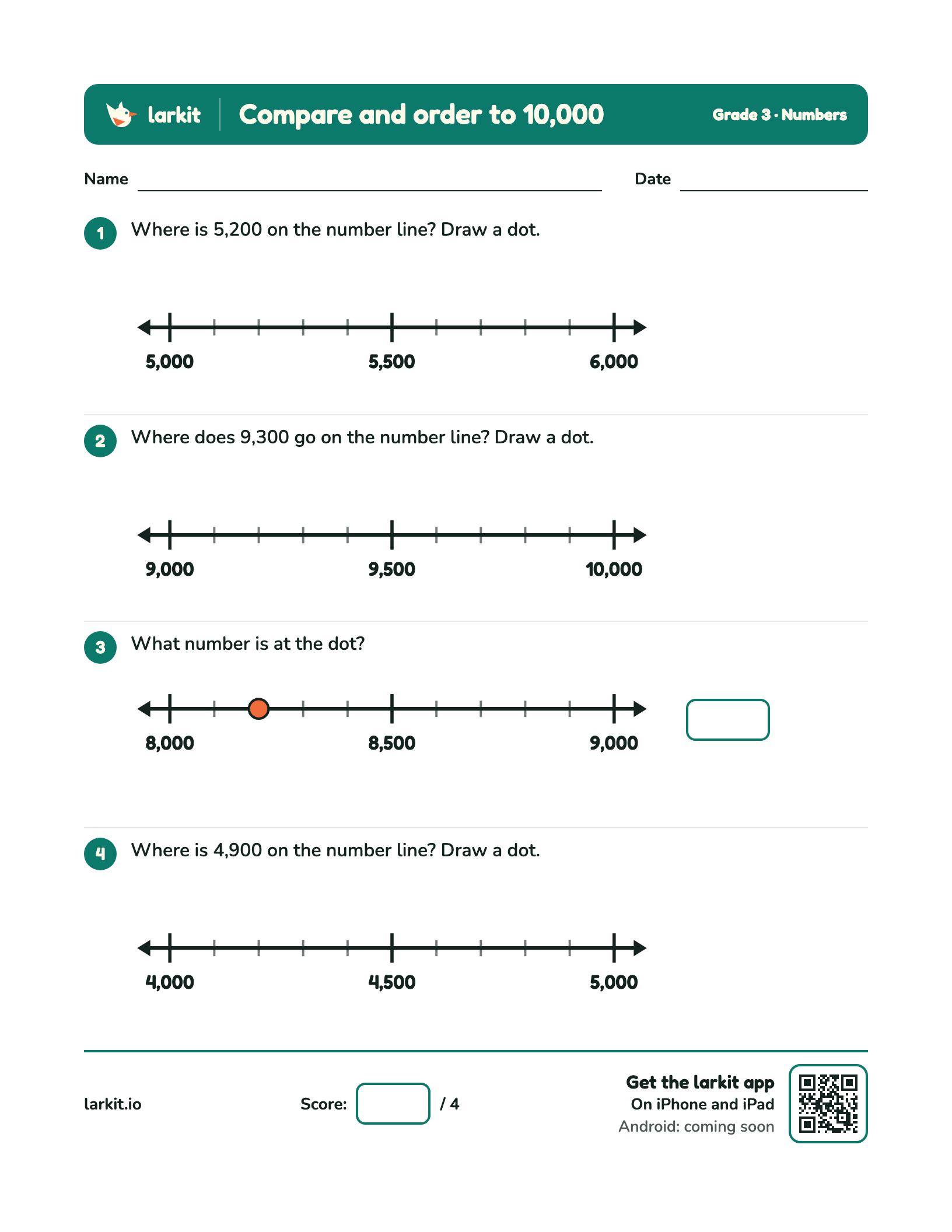
Draw a dot where a 4-digit number goes, and read the number at a dot.
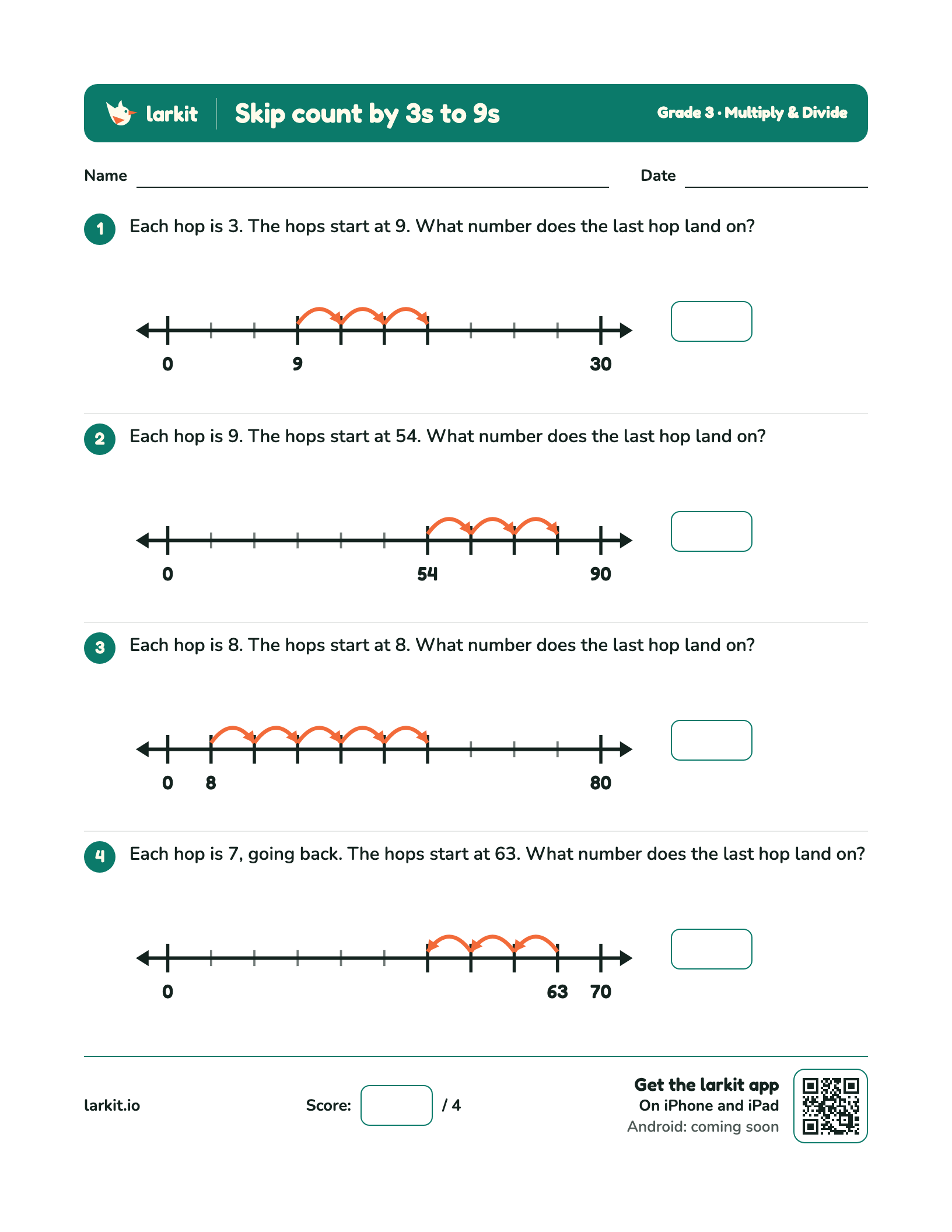
Follow hops of 3 to 9, forward and back, to where the last hop lands.
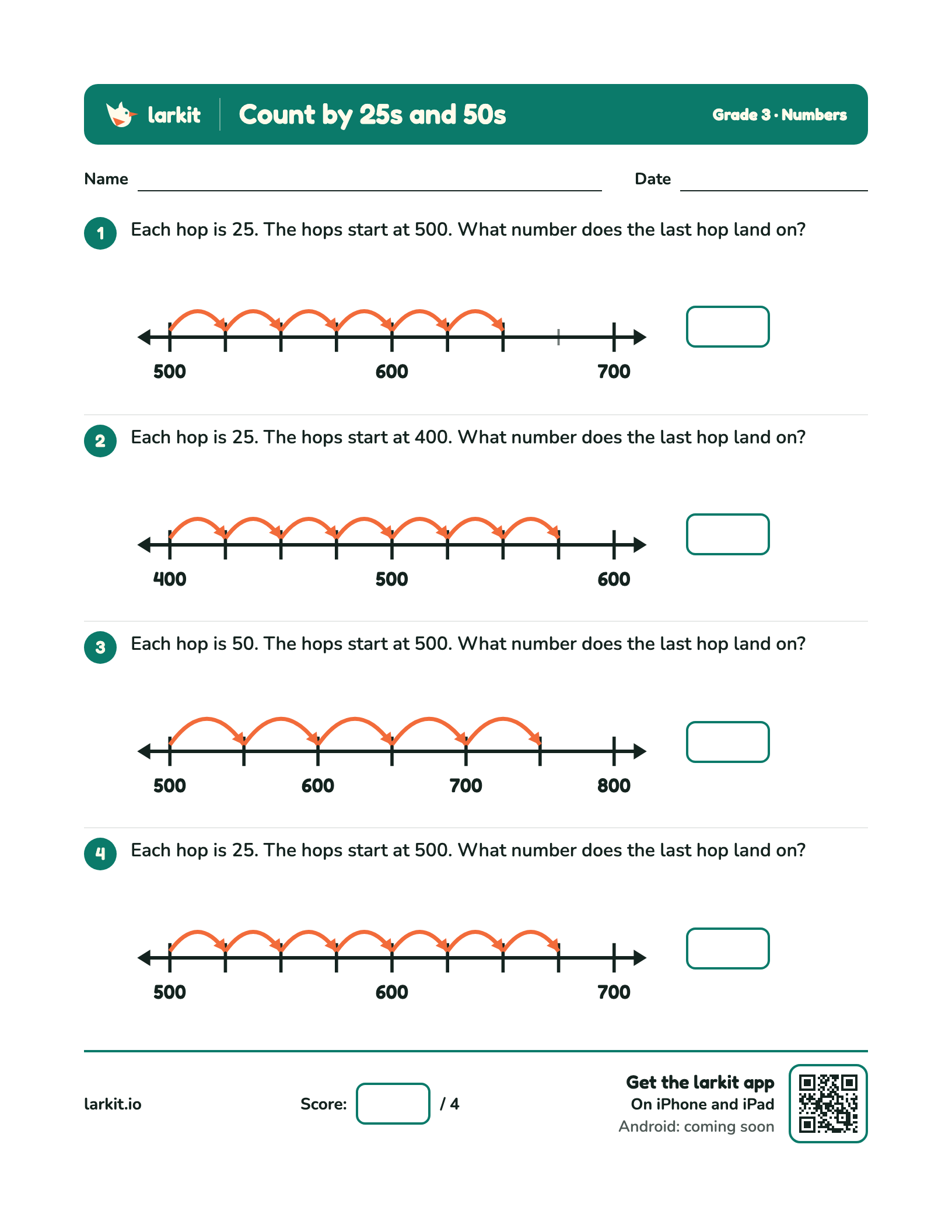
Follow hops of 25 or 50 from a start to where the last hop lands.
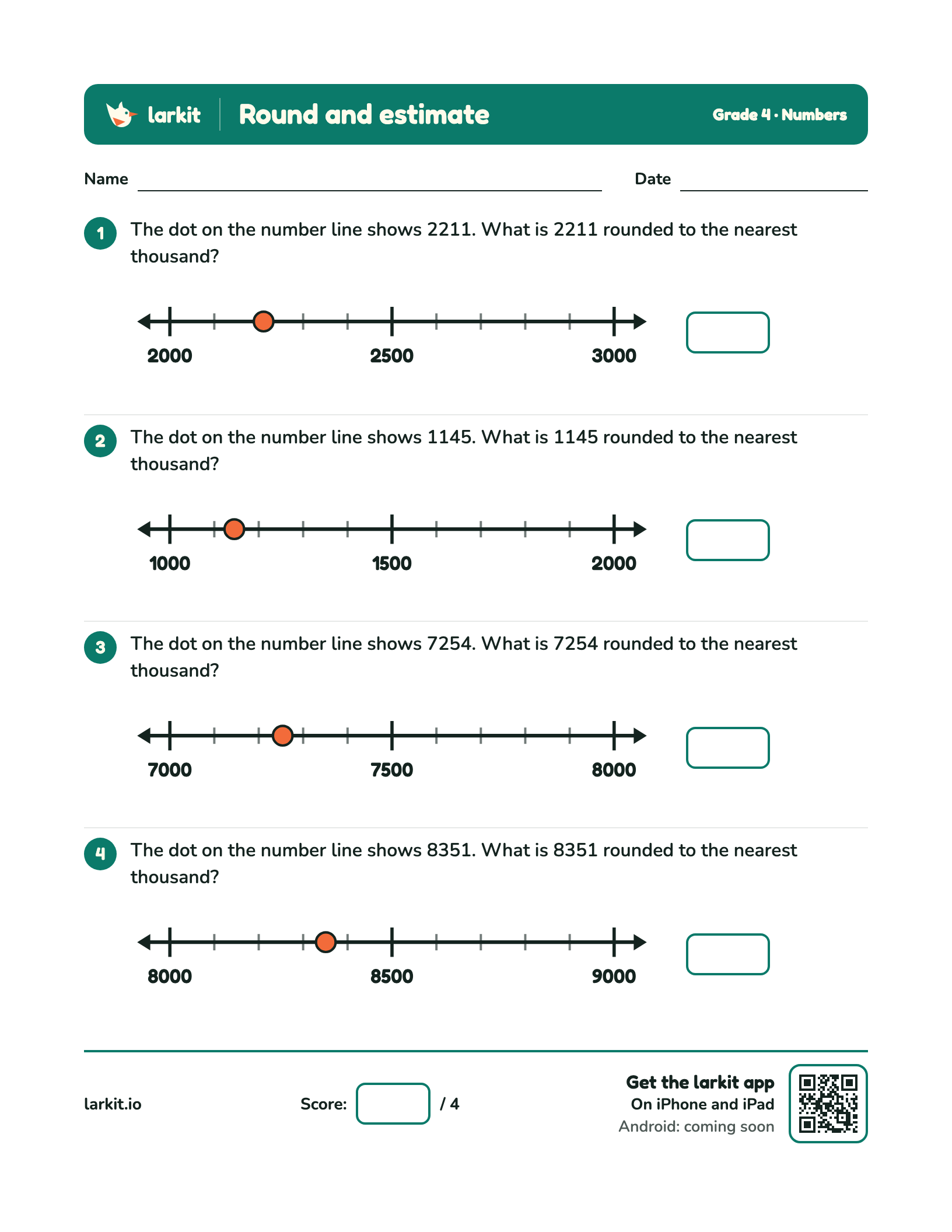
Round a 4-digit number to the nearest thousand, with its dot on the line.
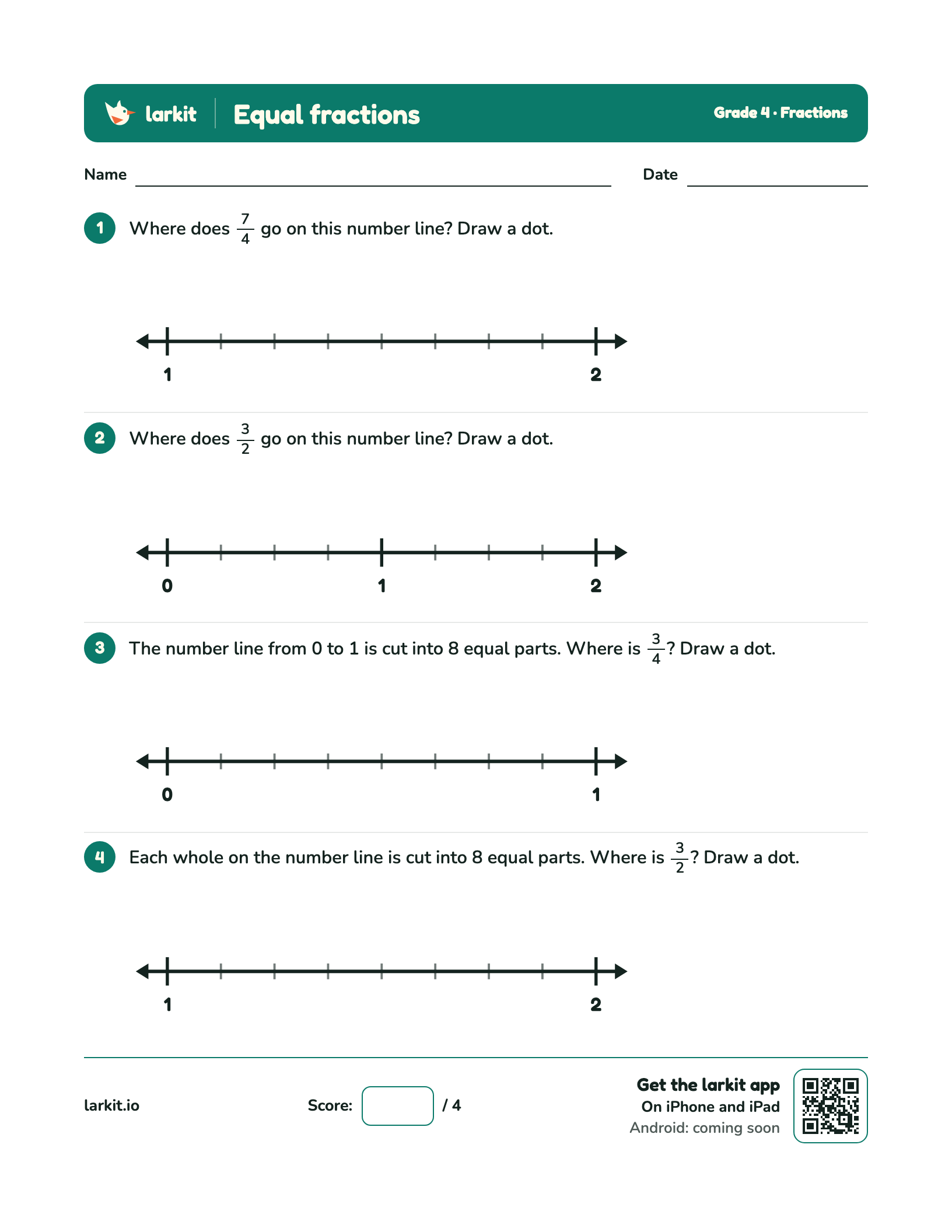
Draw a dot at a fraction on the line, including fractions greater than 1.
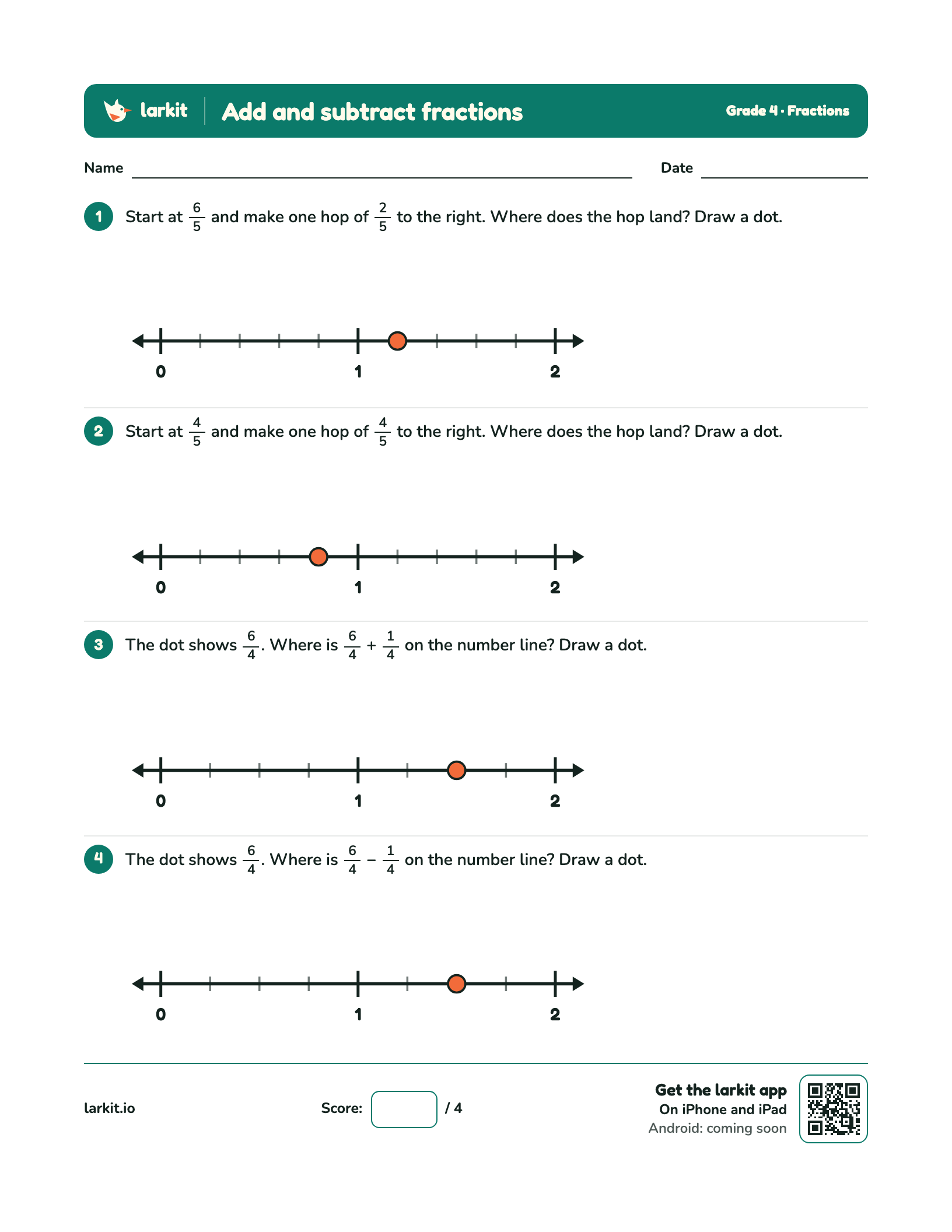
Hop right to add and left to subtract a fraction, then draw a dot where you land.
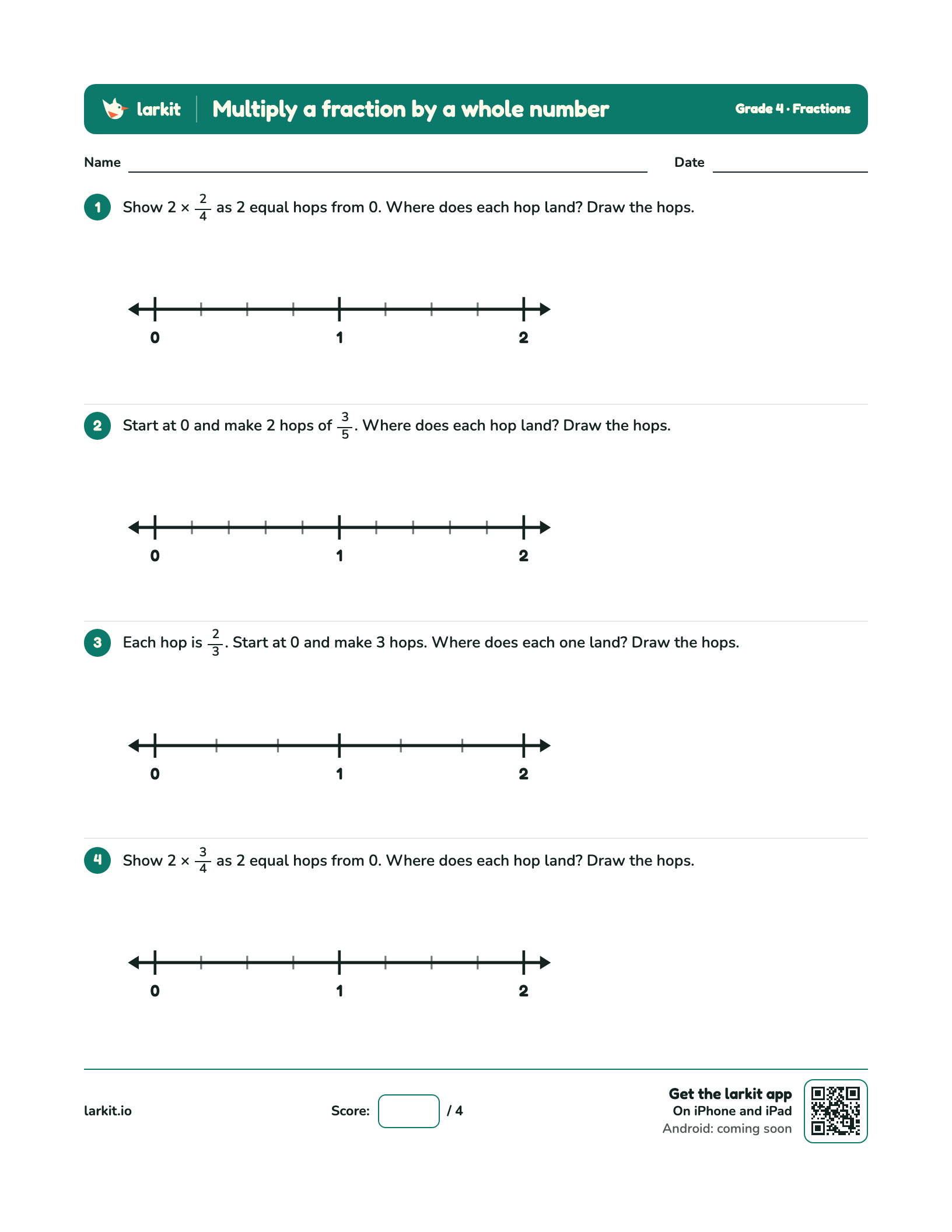
Draw equal hops from 0 to show a whole number times a fraction.
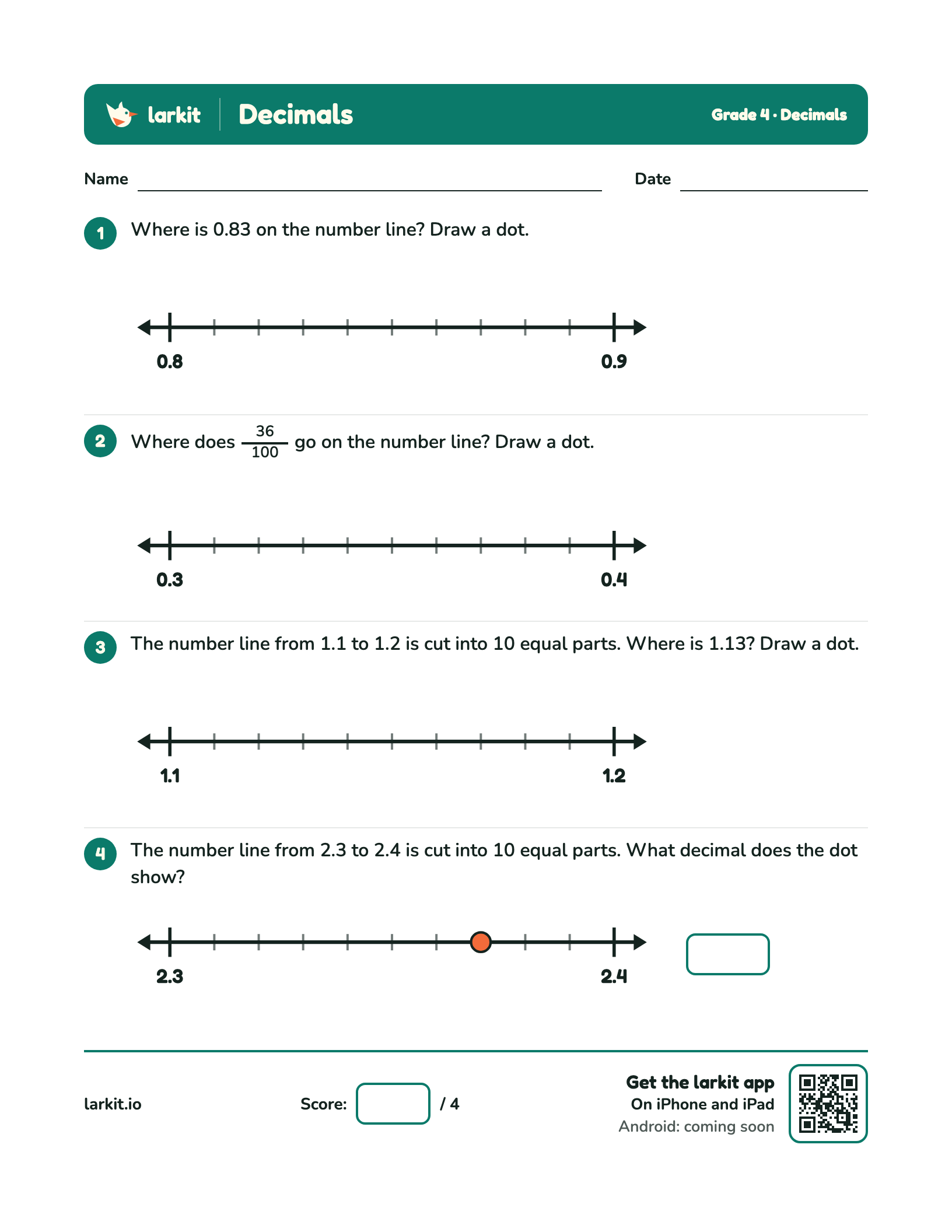
Draw a dot at a decimal or a fraction out of 100, and read a decimal at a dot.
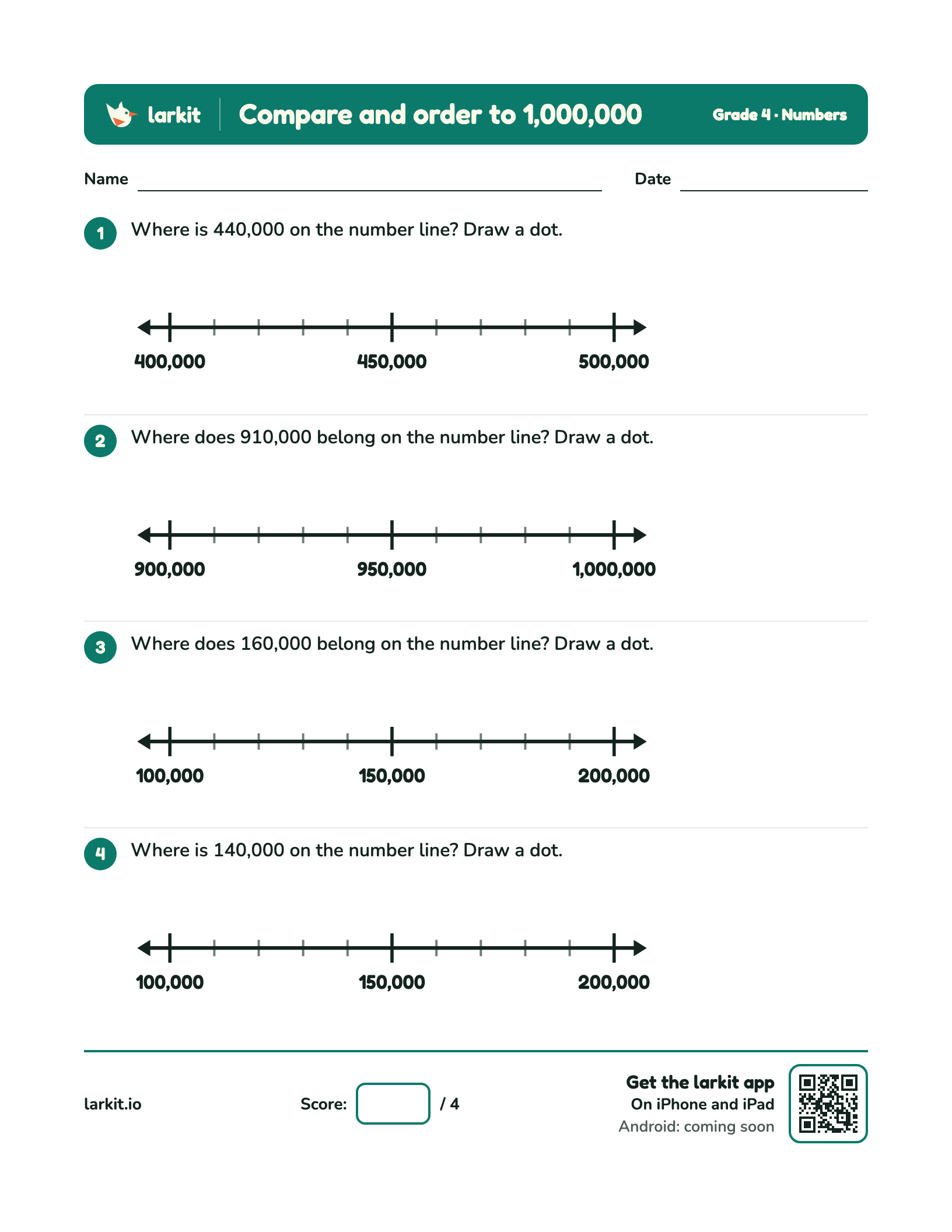
Draw a dot at a number up to 1,000,000, and read the number at a dot.
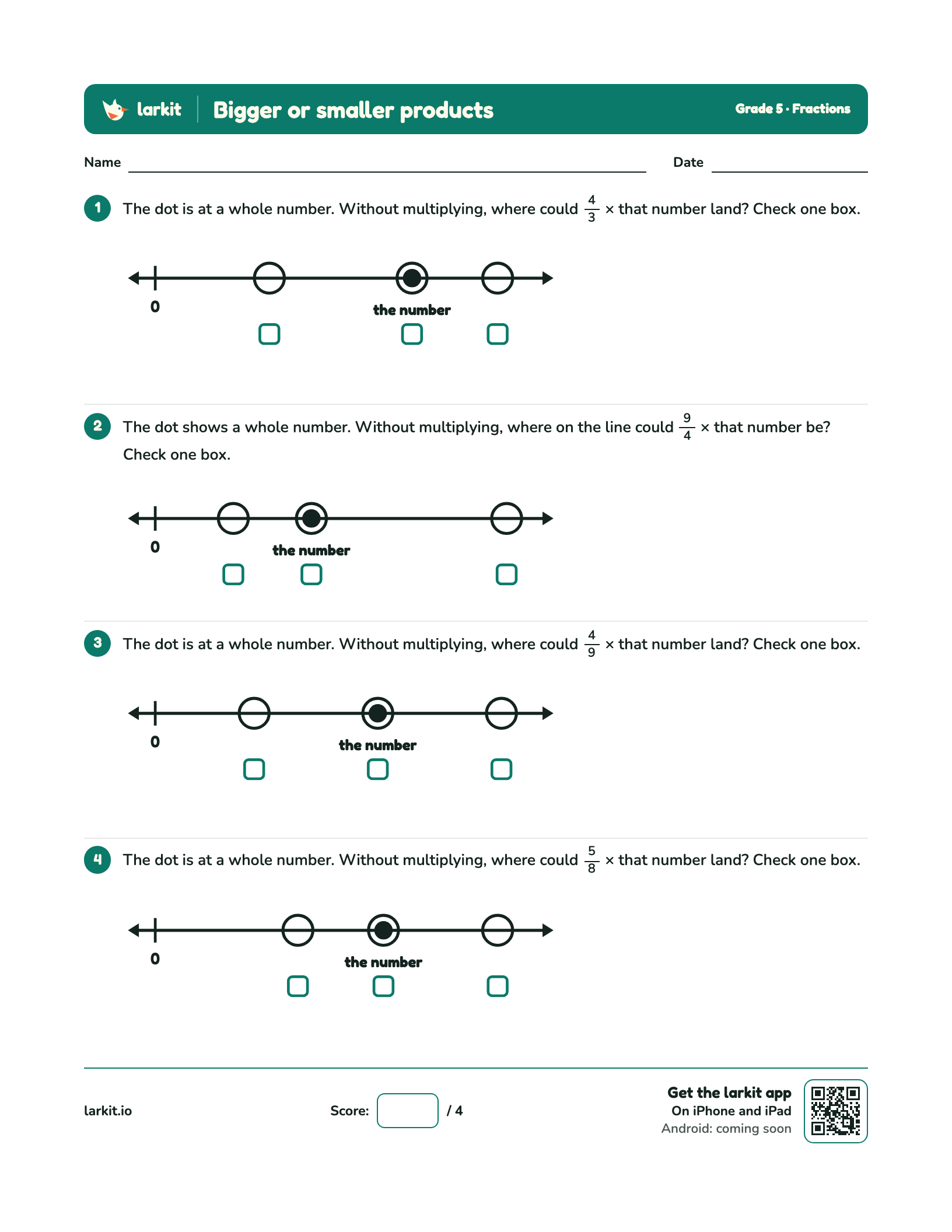
Without multiplying, check the box where a product could land on the line.
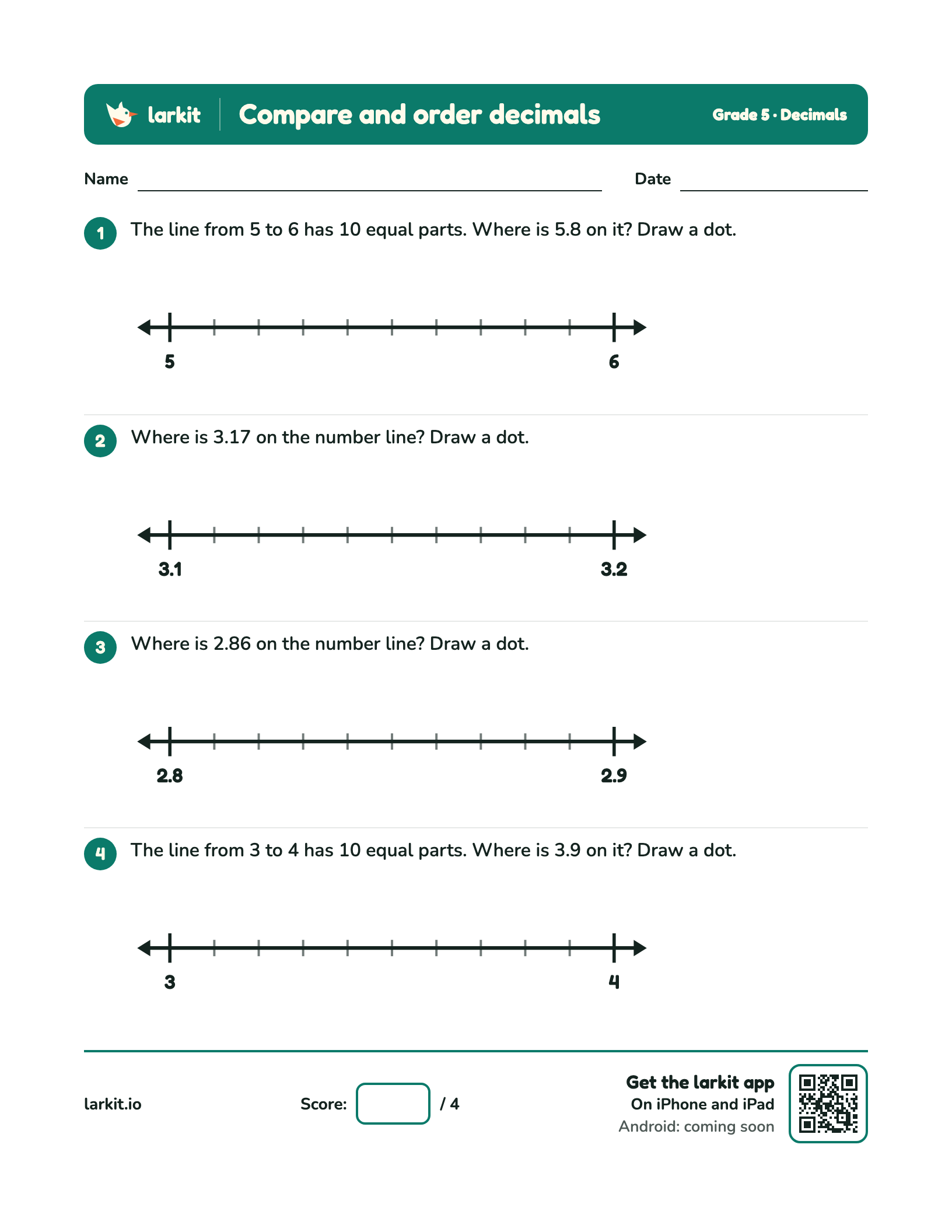
Draw a dot at a decimal on a line marked in tenths or hundredths.
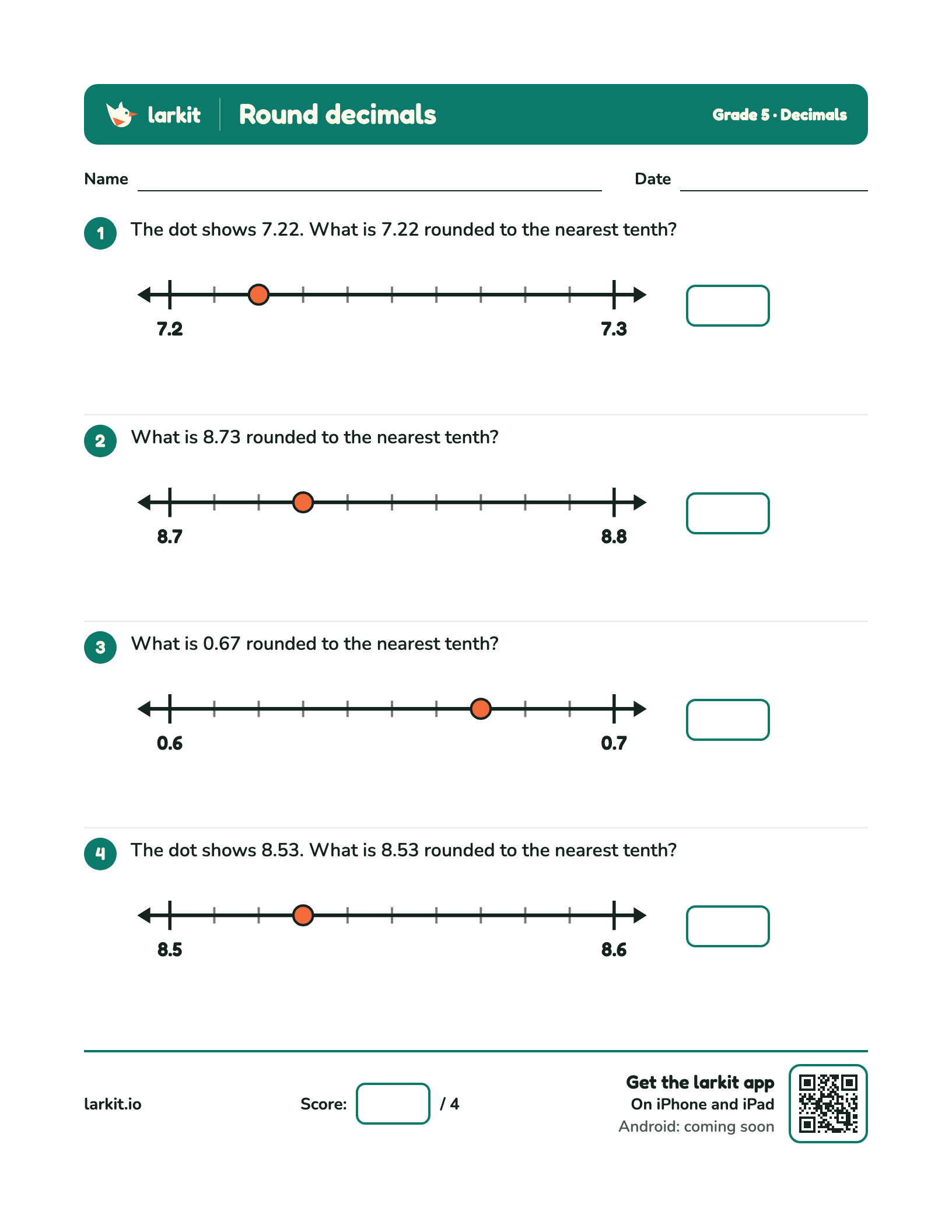
Round a decimal to the nearest tenth, with the line to show which tenth is closer.
Ask your child to put a finger on the start before anything else. Most slips on a number line come from starting at the wrong mark, or from counting the mark you start on as the first hop.
Count the jumps, not the marks. A line cut into 4 equal parts has 5 marks, so a child who counts marks reads one fourth as one fifth. Tracing each jump with a finger fixes it.
Talk about why a line helps. It shows that 3/4 sits closer to 1 than to 0, or that 2,211 is nearer 2,000 than 3,000, in a way a rule alone does not.
From kindergarten, where children hop forward to add and back to take away within 10. In 1st and 2nd grade they place 2-digit and 3-digit numbers and count up to subtract. Fractions on a number line start in 3rd grade, and decimals and rounding follow in 4th and 5th.
Each sheet has its own answer key as a second PDF. The key shows every answer, whether that is a dot or hops drawn on the line, a number in the box, or the right box checked, so you can lay it beside your child's sheet.
It depends on the question. Some ask for a dot at a number, some for the hops from a start, some for one box to check, and some for a number written in the box after counting along the line.
Yes. Every sheet and answer key here is a free PDF with no sign-up. With larkit Premium you can also make new number line sheets for these skills, each with its answer key.
Worksheet maker
With larkit Premium you make new sheets for any skill, as many as you like, each with its answer key.
Free printable